
Waterway Construction & Planning: What Eastern Iowa Farmers and Property Owners Need to Know
If you farm ground in Eastern Iowa, you've seen what water does when you don't give it a place to go. It cuts. It carves. It takes your topsoil with it, one rain event at a time, until a shallow ditch turns into a gully you can lose a tire in. A properly built waterway is how you stop that — and it's one of the most overlooked investments a landowner can make in a field's long-term health.
Here's what goes into planning and building one right.
This is a great video from the Blanchard River Demonstration Farms Network.
What a Waterway Actually Does
A grassed waterway is a shaped, vegetated channel built to carry concentrated runoff across a field without letting it erode the soil underneath. Instead of water finding its own path — usually the steepest, most destructive one — it moves through a designed channel with a stable grade, proper width, and grass cover strong enough to hold the soil in place.
Done right, a waterway:
Stops gully erosion before it starts eating into productive acres
Slows water down so it's not carrying sediment straight into a tile line, ditch, or stream
Protects farm tile and grade work you've already invested in
Keeps equipment out of rough, washed-out ground during planting and harvest
Buys you cleaner runoff and fewer headaches with neighboring drainage
If you're farming rolling ground anywhere across Dubuque, Delaware, Jones, Jackson, or Buchanan County, chances are you've already got a spot or two that needs one — even if it hasn't washed out bad yet.
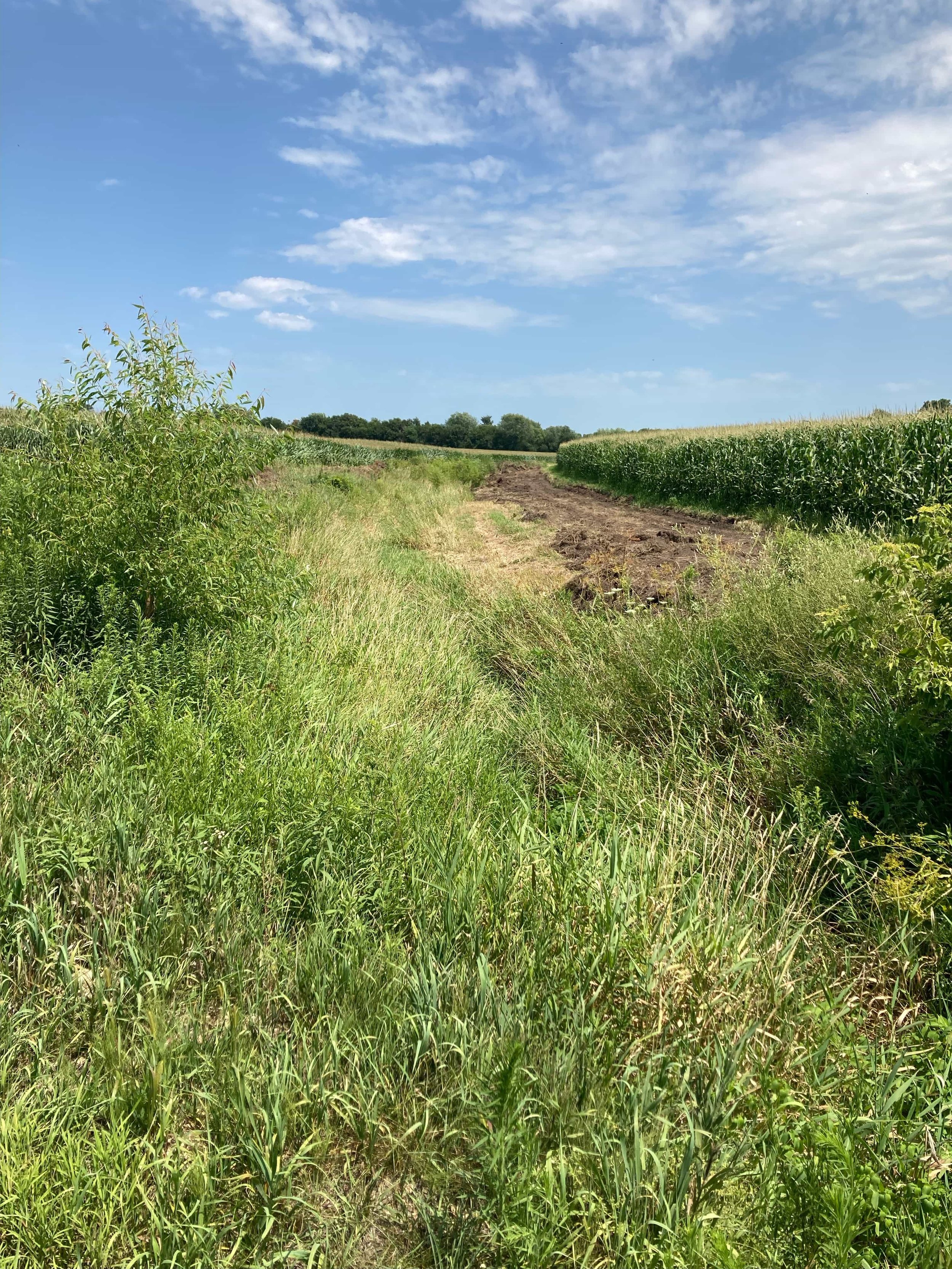
This is the “Before” of a waterway project we completed for a client in rural Jones County, Iowa.
Signs You Need a Waterway (Not Just a Ditch Fix)
A lot of landowners try to patch erosion year after year — filling in the same low spot, running dirt back into the same washout — without addressing why it's happening. A few signs it's time to stop patching and start planning:
The same spot washes out every spring, no matter what you fill it with
You're seeing exposed subsoil or a visible channel forming where there used to be none
Water is ponding or cutting around field tile outlets
Equipment has to detour around a rough or unstable area
Sediment is showing up in a ditch, culvert, or neighboring field that didn't used to have it
If any of that sounds familiar, a properly engineered waterway — not another load of fill dirt — is usually the fix that actually holds.
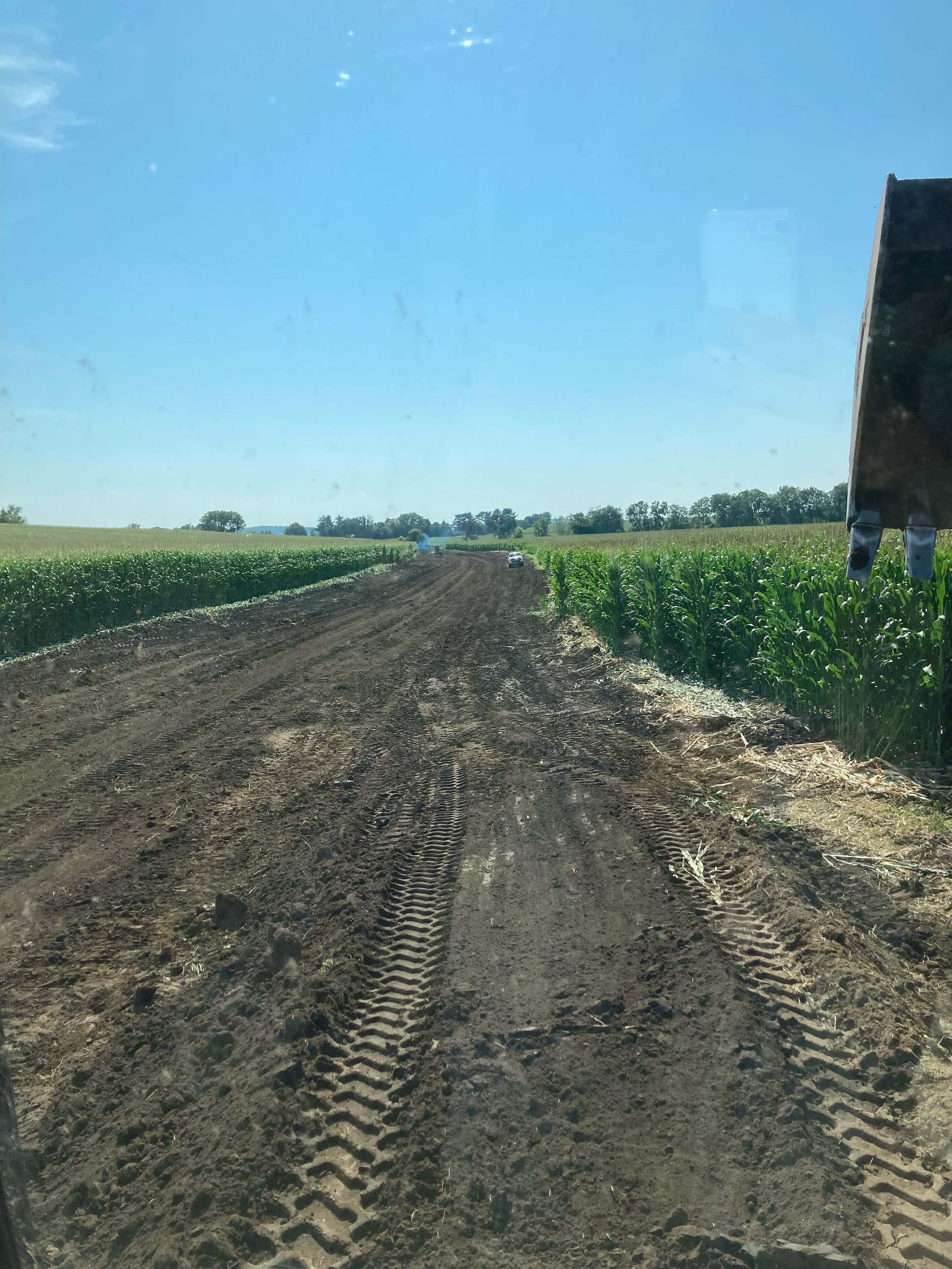
After planning, our first step was a rough grade pass to remove vegetation and get an initial shape for the waterway.
Planning: The Part Most People Skip
Waterway work isn't just "dig where the water's going." A waterway that's shaped wrong, graded wrong, or seeded wrong will fail — sometimes in the first big rain. Planning matters more than the digging does.
Grade and drainage area. We look at how much ground drains into that channel and how steep the fall is. That determines the width, depth, and shape needed to move water without it picking up speed and cutting again.
Outlet. Every waterway needs somewhere to send water that won't just create a new erosion problem downstream — whether that's tile, a stable ditch, or a structure built to handle the flow.
Tile interaction. A lot of waterway projects tie directly into farm tile and ag drainage work already in the ground. If the waterway and the tile aren't planned together, you can end up fighting your own system.
Seeding and establishment. Grade work is only half the job. The right seed mix, timing, and establishment plan is what actually holds the soil once the shaping is done.
Access for future equipment. A waterway built without a mower or maintenance in mind becomes a maintenance problem in a couple years.
This is the stage where experience matters most — Eastern Iowa's rolling ground, heavy clay in spots, and tile-drained fields don't behave like a generic spec sheet. Twenty-plus years of building waterways across this specific terrain means knowing where a "textbook" design needs adjusting for how water actually moves on Iowa ground.
Construction: What Actually Happens On-Site
Once a waterway is planned, the build itself comes down to doing the earthwork right — no shortcuts on grade, no skipping compaction, no rushing the seed bed.
Staking and layout — Marking the channel to the planned width, depth, and grade before equipment moves.
Rough shaping — Cutting and grading the channel to the design profile, moving and balancing dirt on-site where possible.
Fine grading — Smoothing the final surface so water moves evenly across the whole channel instead of concentrating in low spots.
Outlet and structure work — Tying in tile, risers, or stabilization structures where the waterway discharges.
Seedbed prep and seeding — Getting a clean, firm seedbed and the right mix down before the ground has a chance to erode again.
Erosion control during establishment — Matting, mulch, or other cover to protect the channel while grass takes hold.
The timeline depends on the size of the drainage area and how much dirt needs to move, but most farm waterway projects are built between crops — planned around planting and harvest, not fought around them.
Why Timing Matters
Late summer through fall is prime waterway season across Eastern Iowa. Fields are open after harvest, ground conditions are typically drier and more workable, and there's enough time left in the season to get grass established before winter — or to shape the channel in fall and seed early the following spring. Waiting until a wet spring to deal with an eroding waterway usually means working in worse conditions on a tighter timeline.
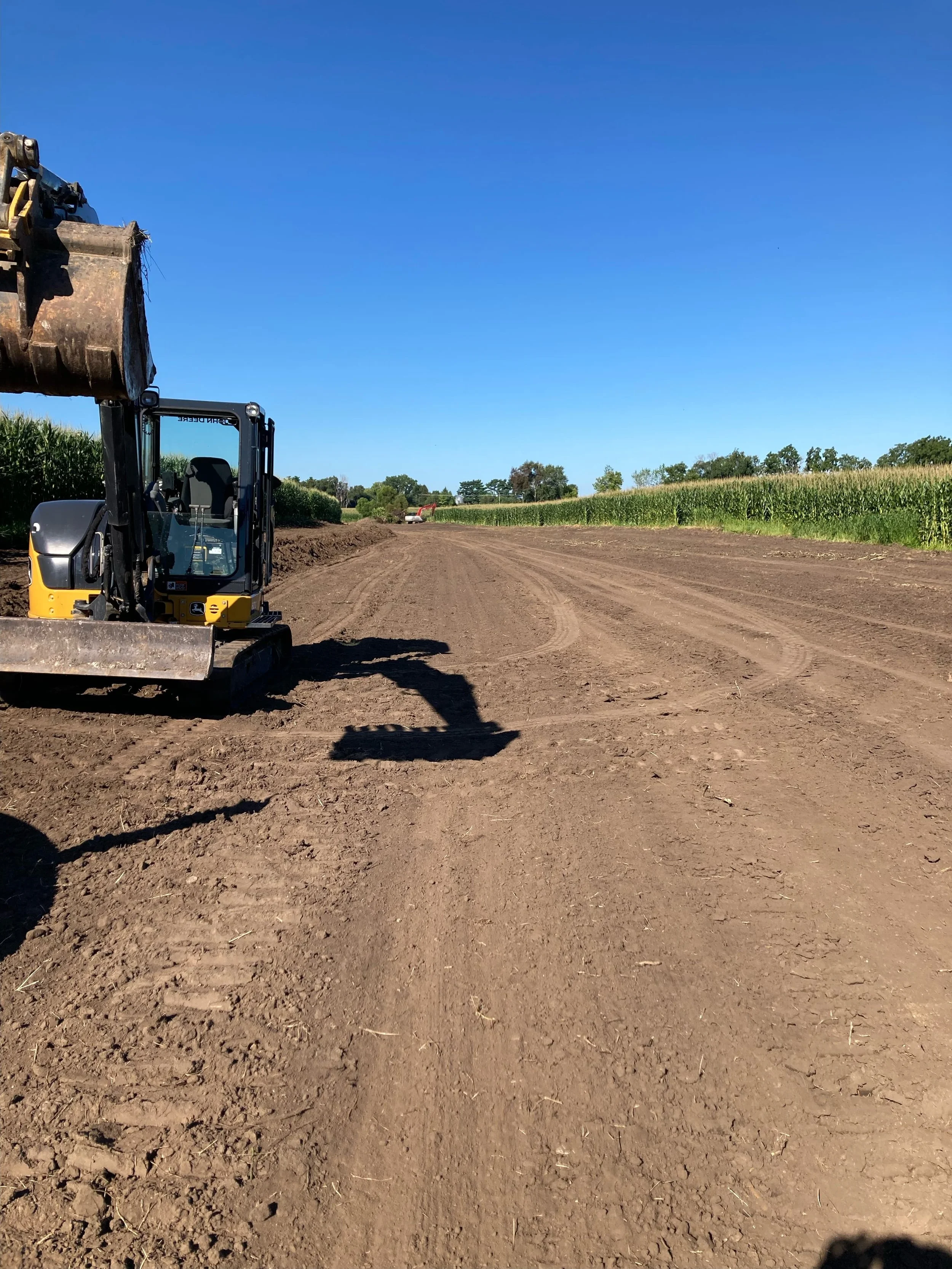
Tiled, graded and ready for seeding.
Built for Iowa Ground, Not a Generic Spec
Waterway work is really a mix of design know-how and field experience — reading how water actually moves across a specific piece of Eastern Iowa ground, not just plugging numbers into a formula. That's the difference between a waterway that holds for twenty years and one that's back to being a problem in three.
If you've got a spot on your ground that keeps washing out, or you're planning ahead for next season, now's the time to start that conversation — before spring rains make the decision for you.
Serving Dubuque, Delaware, Jones, Jackson, and Buchanan counties. Reach out to talk through your ground, your drainage, and what a properly built waterway would take.
We move the earth for our clients. Contact our crew at 5635426610 to get your next waterway project on the schedule.