
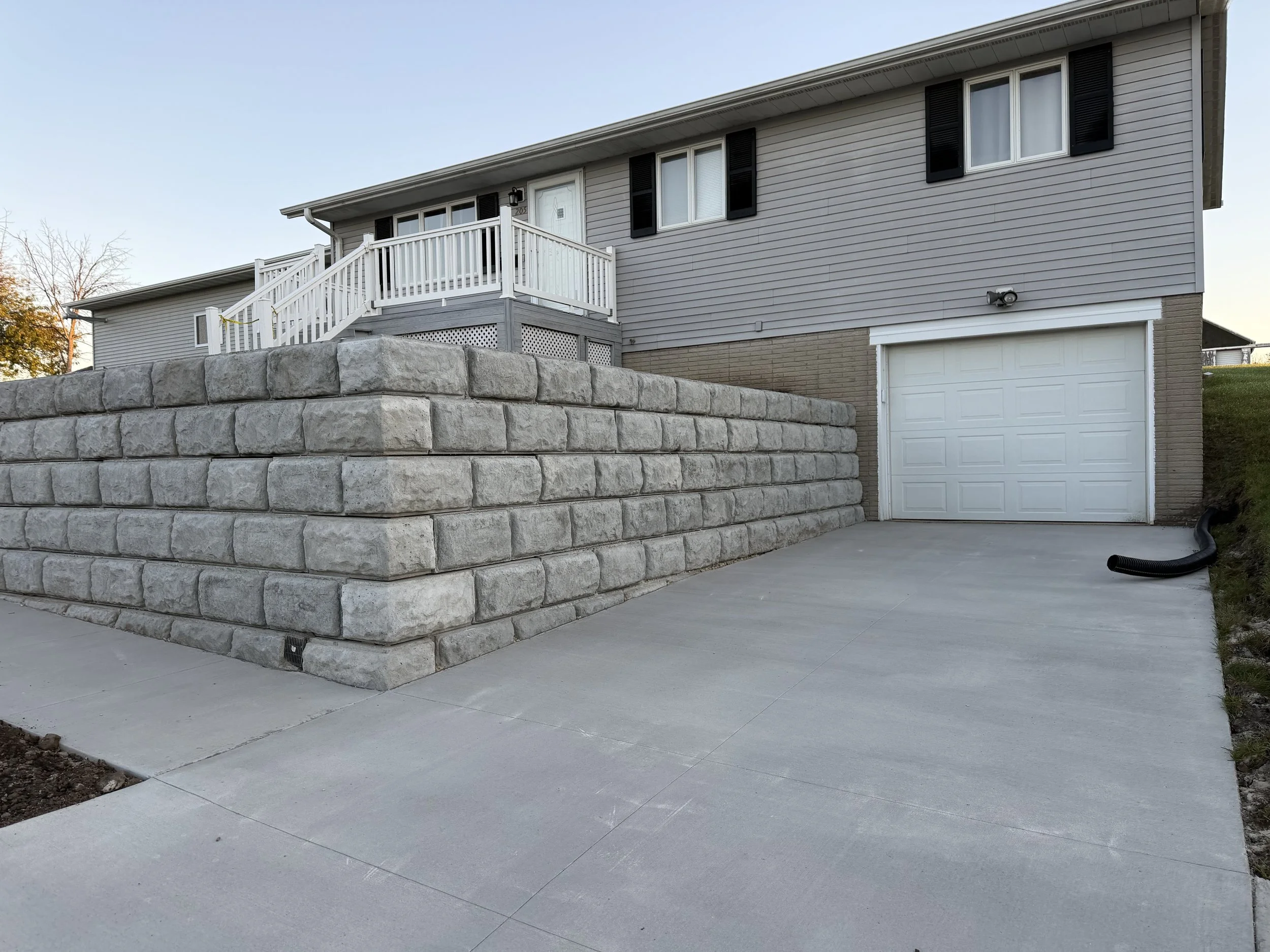
A retaining wall does a hard job that nobody notices until it quits. This fall, our crew rebuilt the front of a residential property in Cascade, Iowa. The old retaining wall, sidewalk, and driveway came out. New drainage, a new wall, new concrete, and a regraded yard went in.
Here's how the project went from start to finish, and why the order of the work matters as much as the materials.
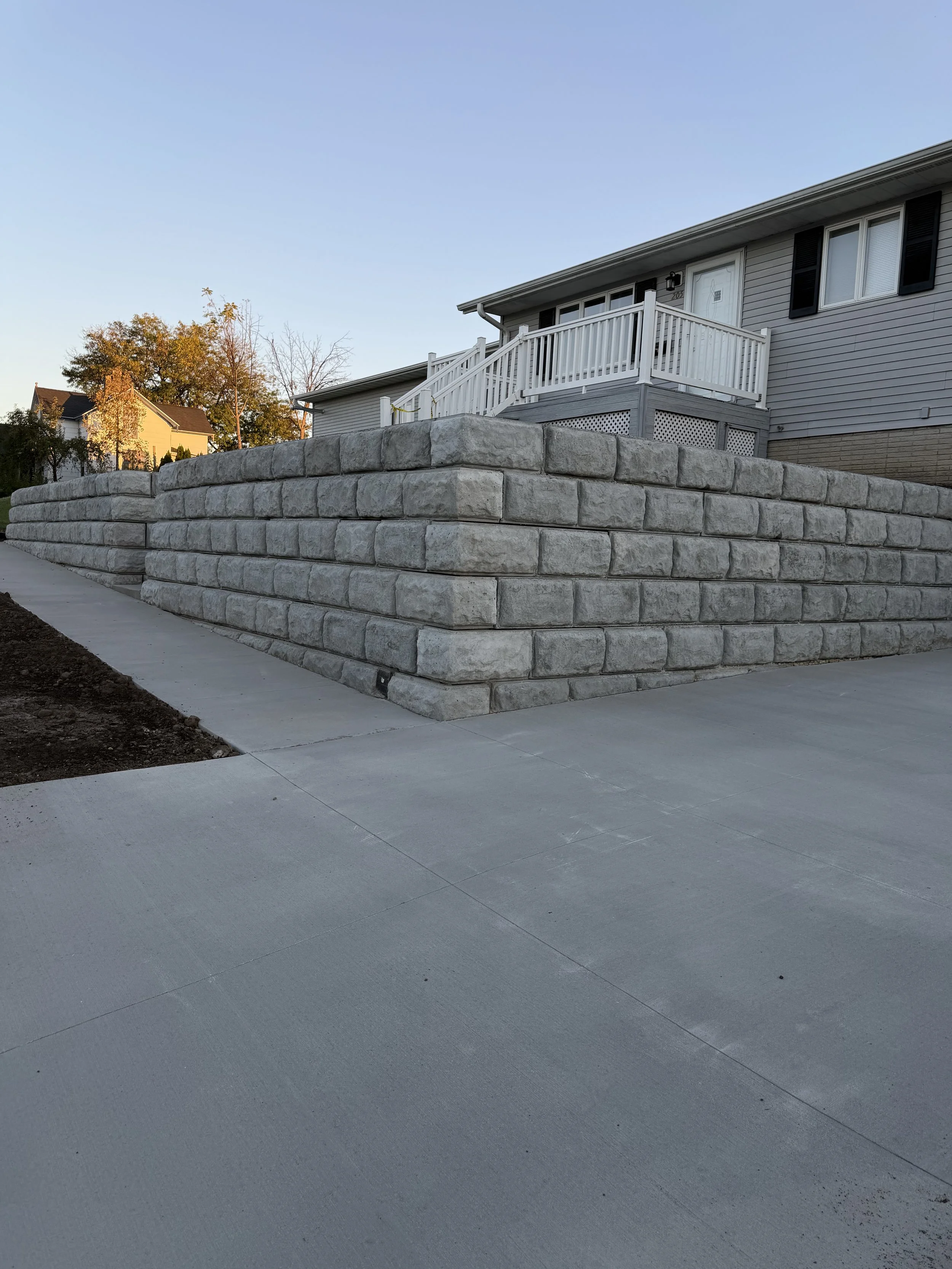
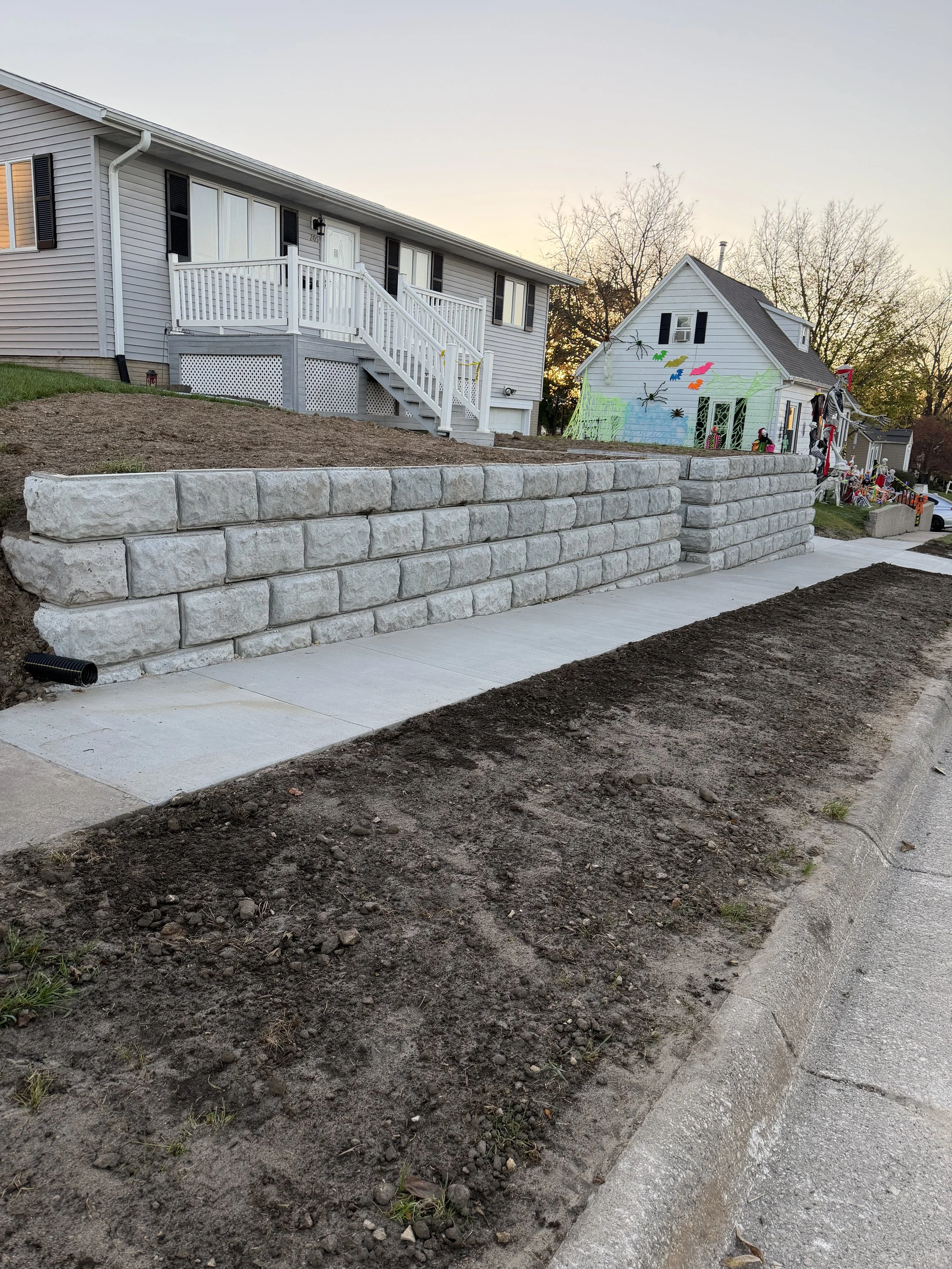
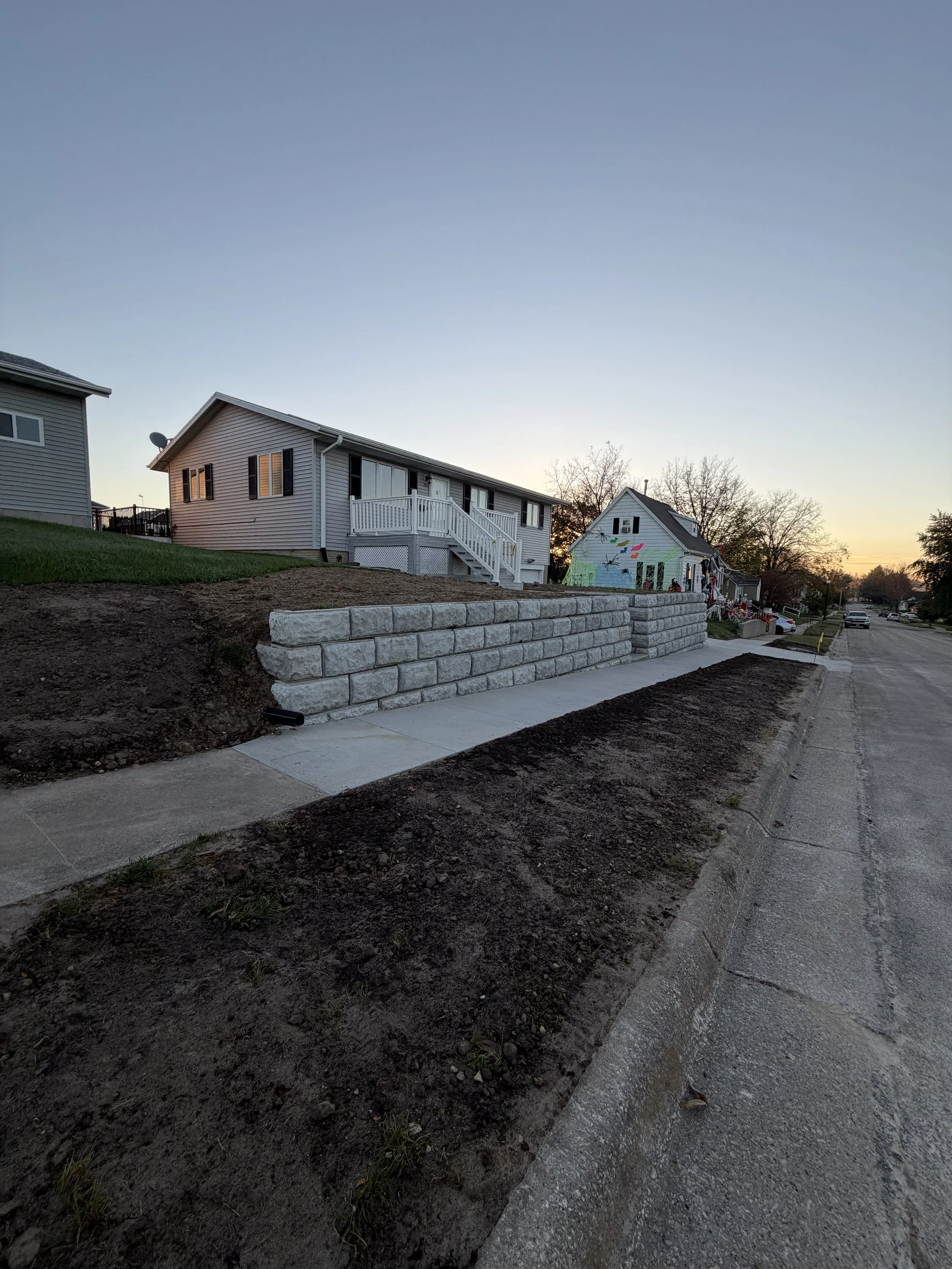
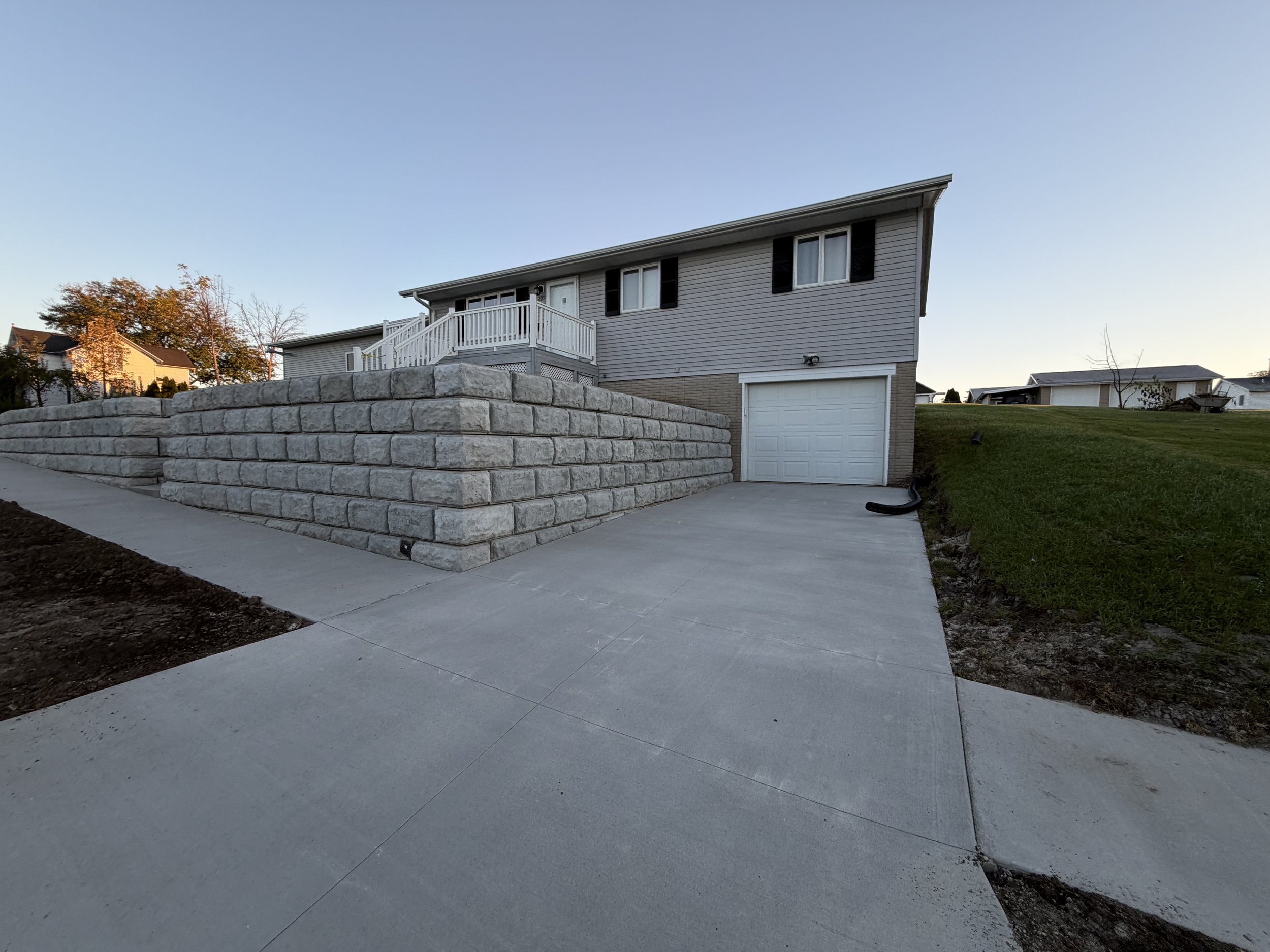
What We Were Working With
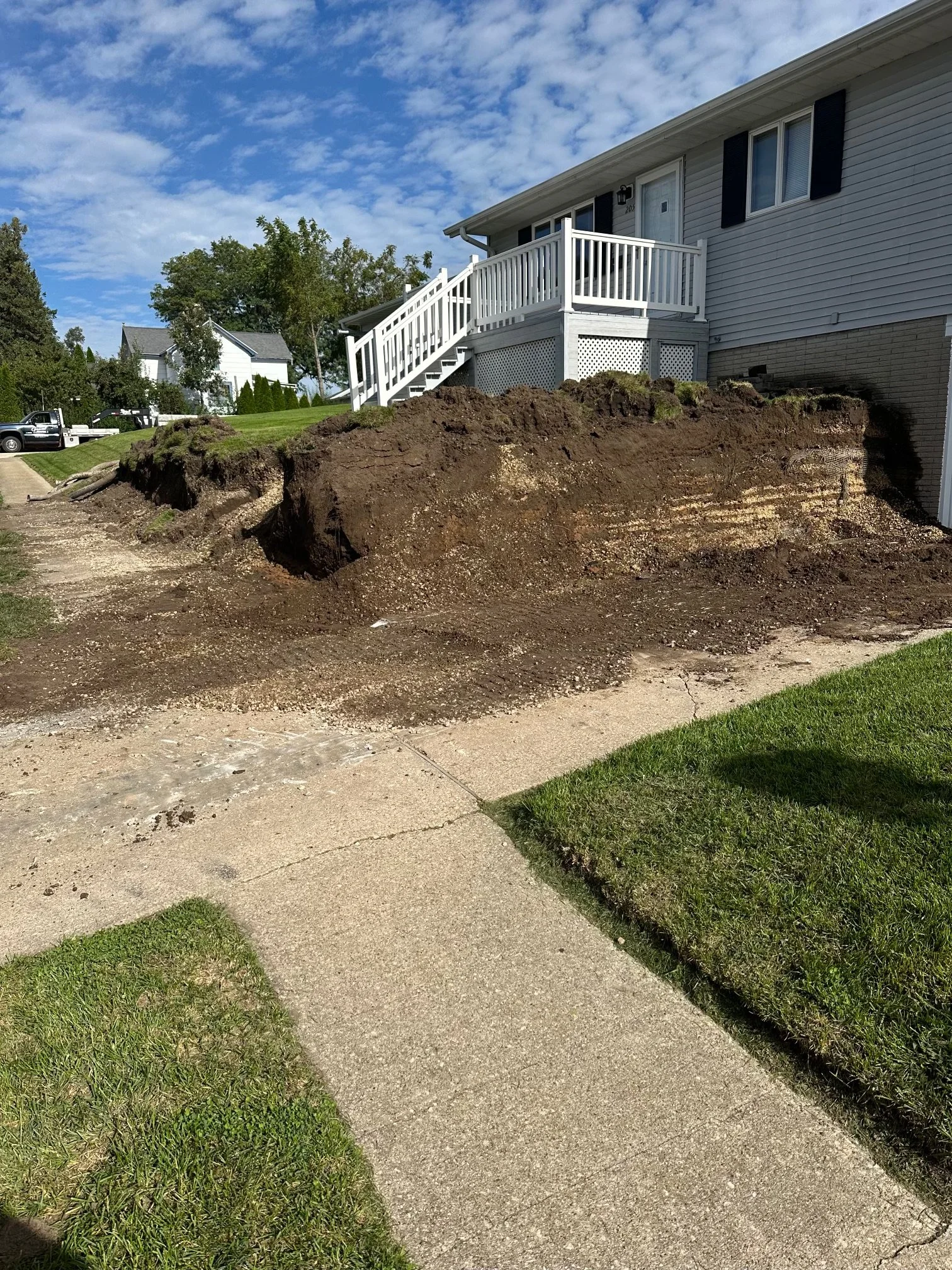
The house sits above street level on a slope, and the old retaining wall held that hill back. A sidewalk and driveway ran along its base. Everything was aging, and the whole front of the property needed to be handled together rather than patched one piece at a time.
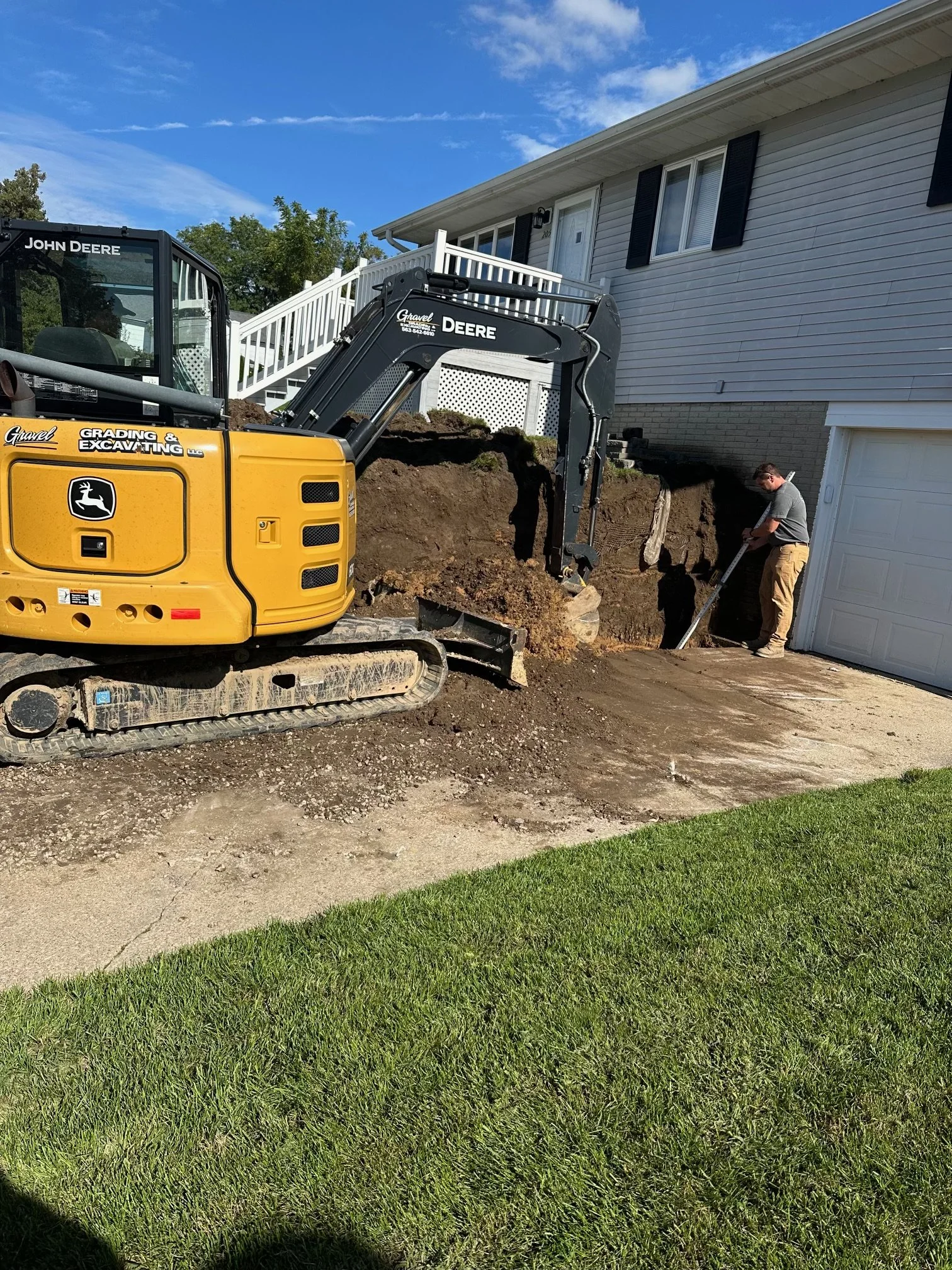
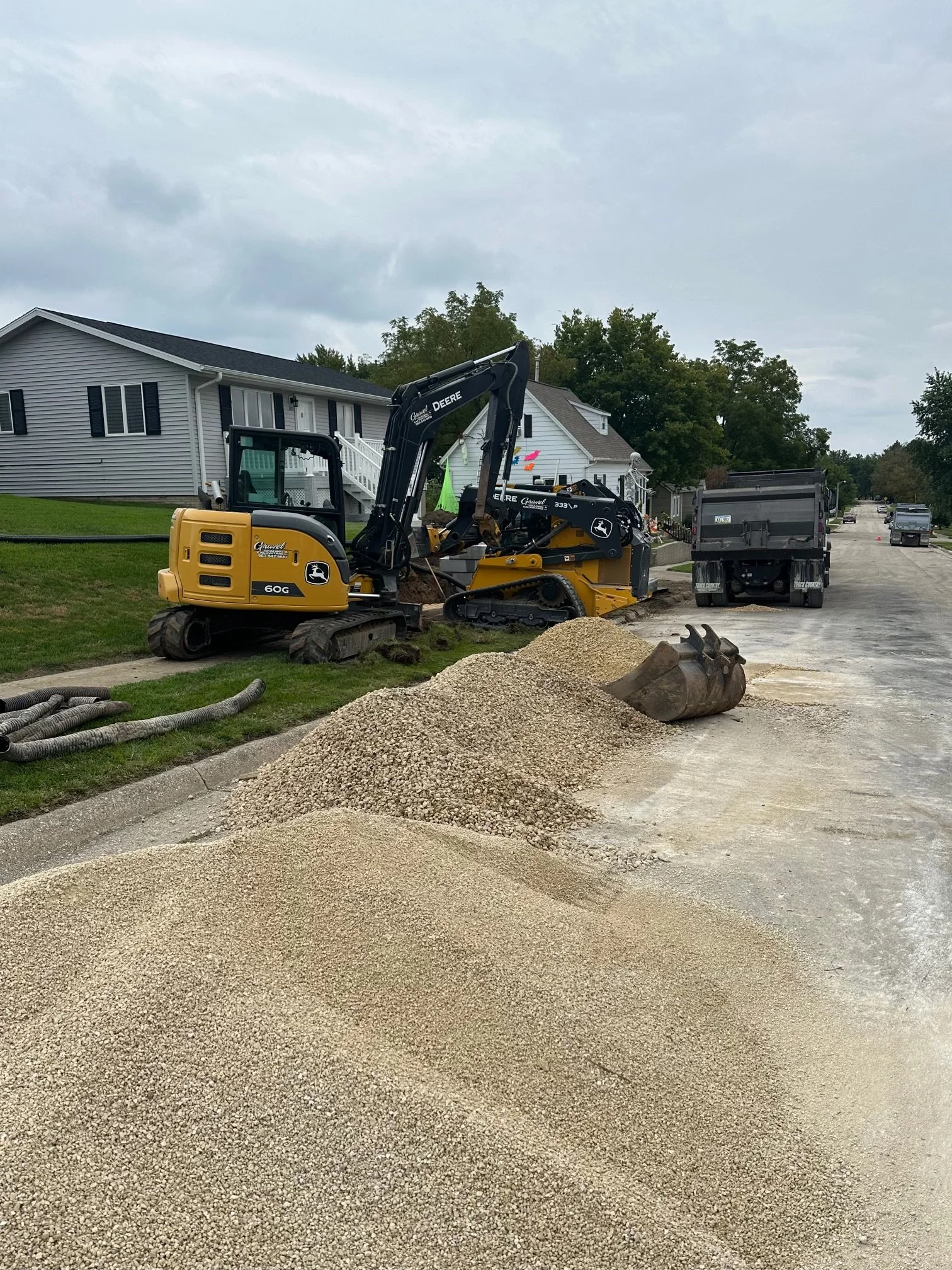
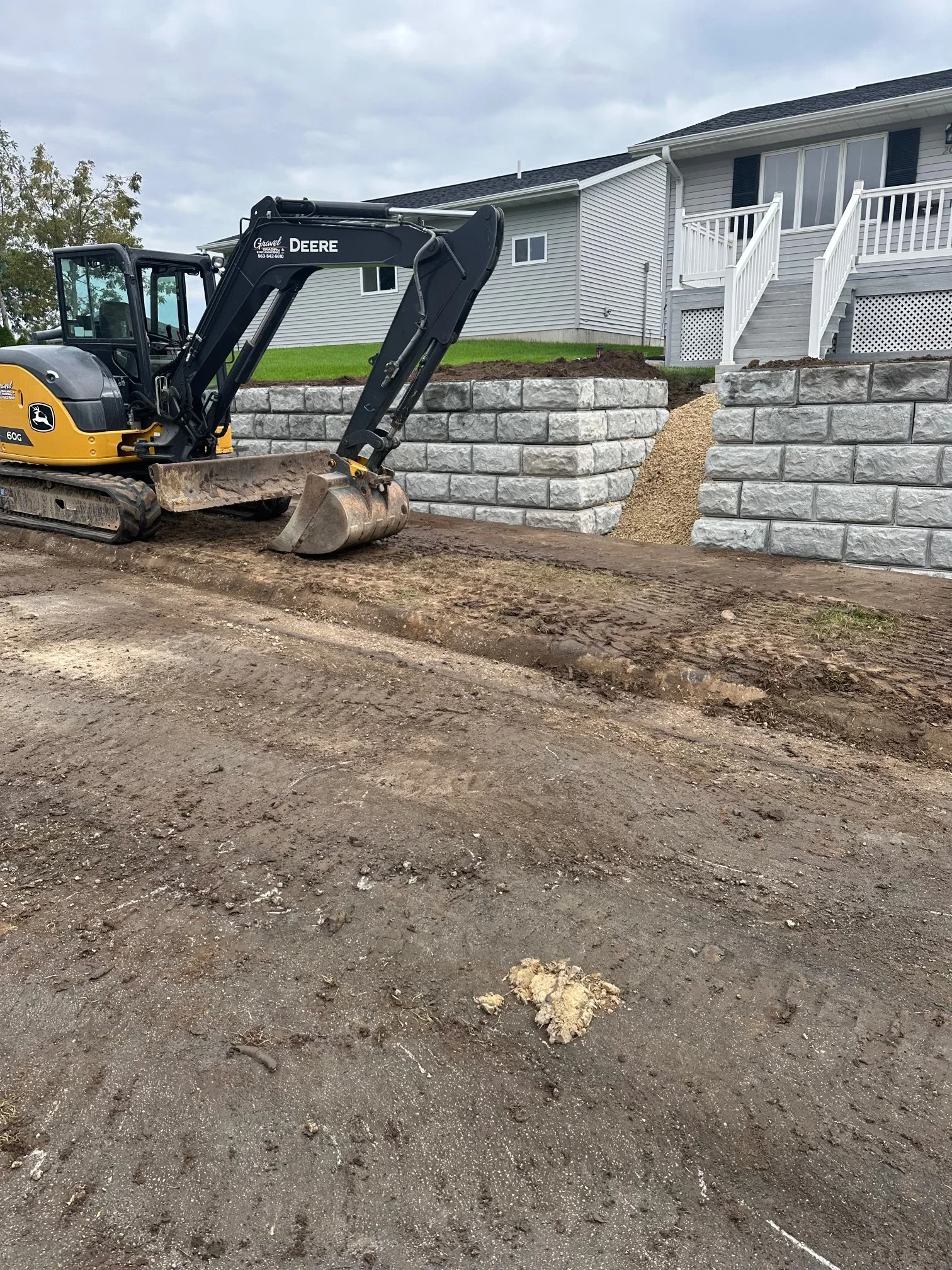
So we started by taking it all out. Our John Deere excavator tore out the wall, sidewalk, and driveway, and our dump trucks hauled the old material off the site. A compact track loader kept the work area clear and moved rock and dirt where we needed it.
Why remove everything? You can't build a lasting wall on top of whatever was under the old one. We dug down and rebuilt from the base up.
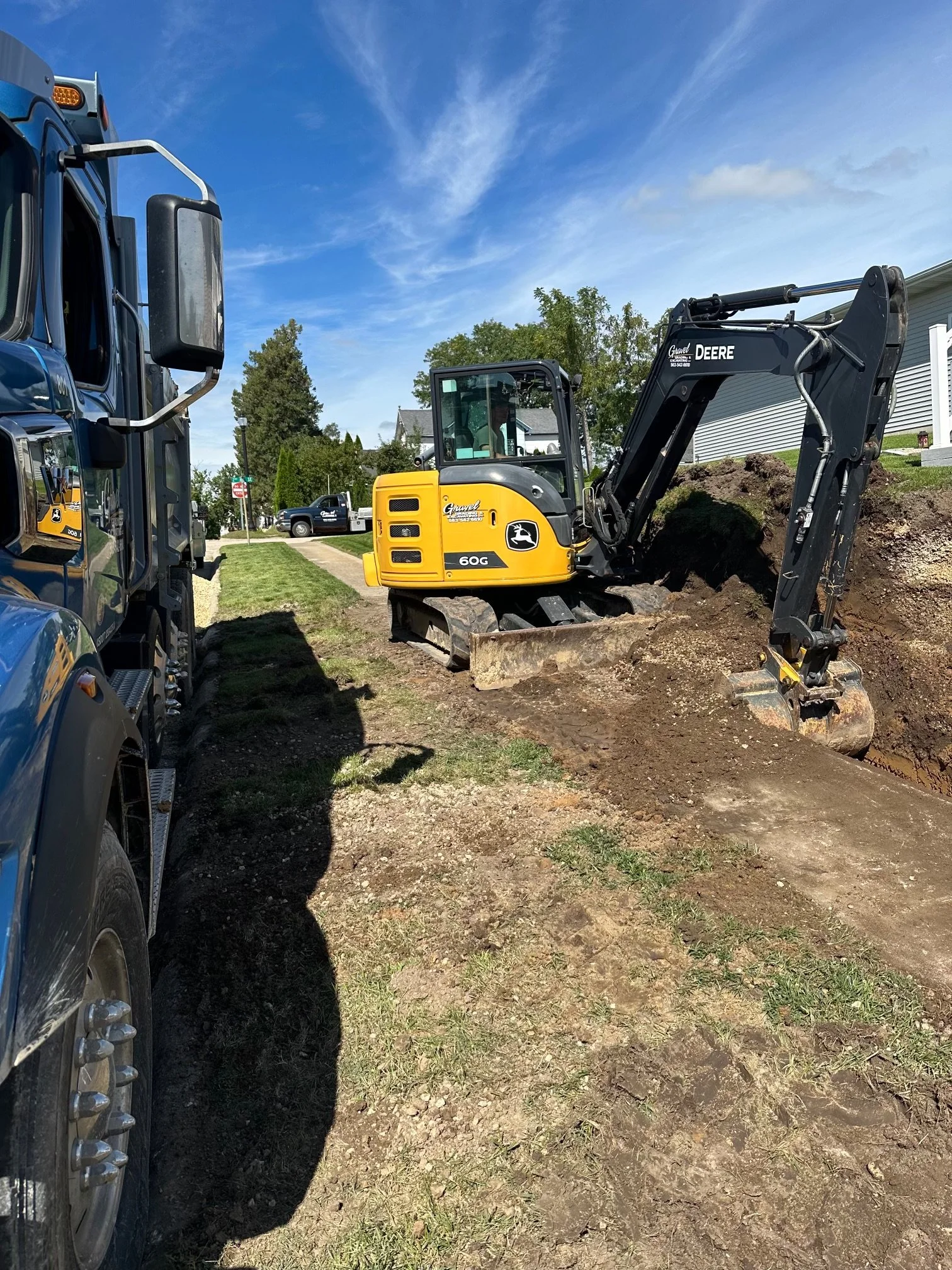
Drainage and Base: The Part You Won't See
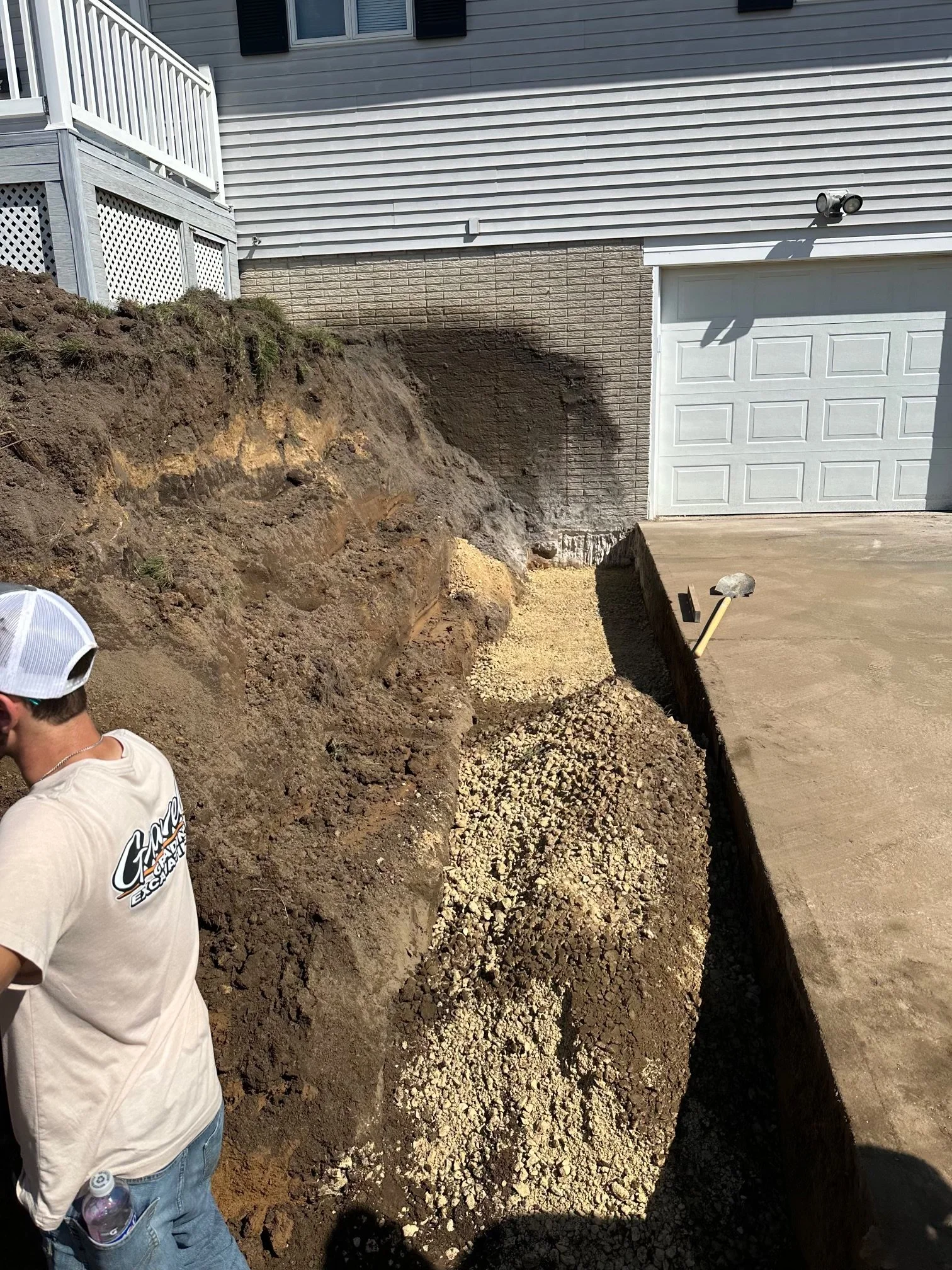
Water is what kills a retaining wall. A hillside full of wet soil pushes on a wall far harder than dry soil does, and water that has nowhere to go will find a way out through the wall itself.
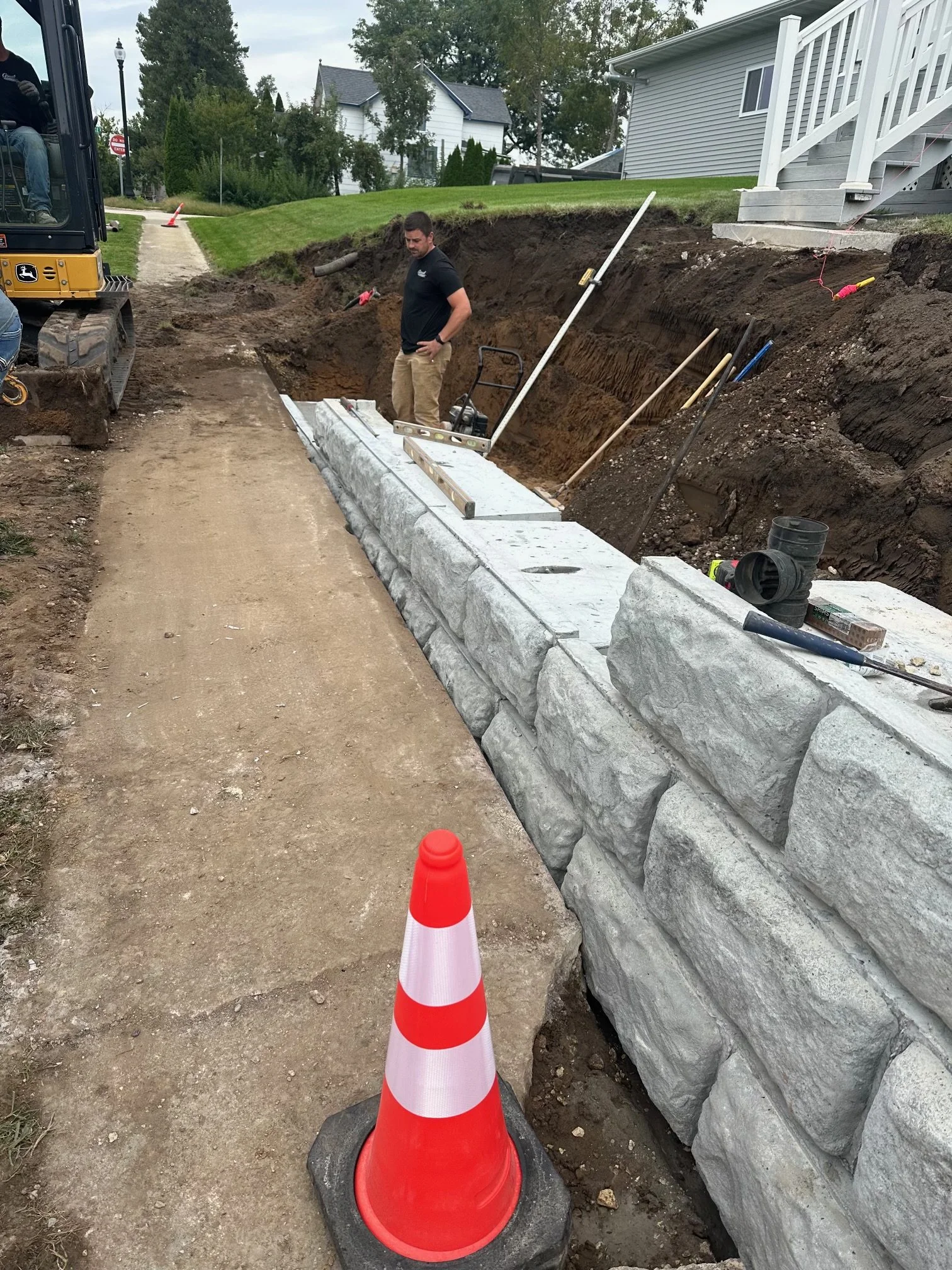
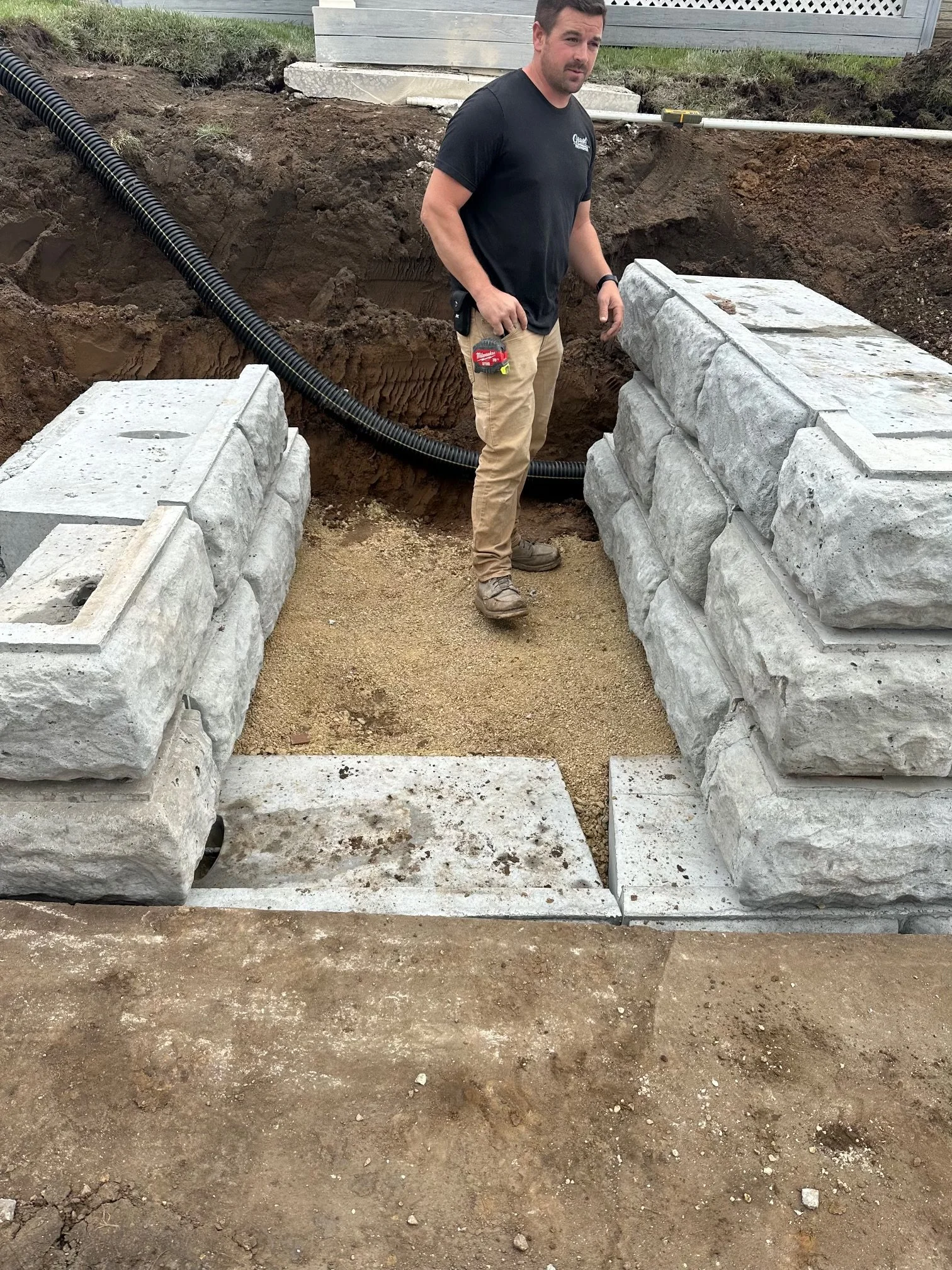
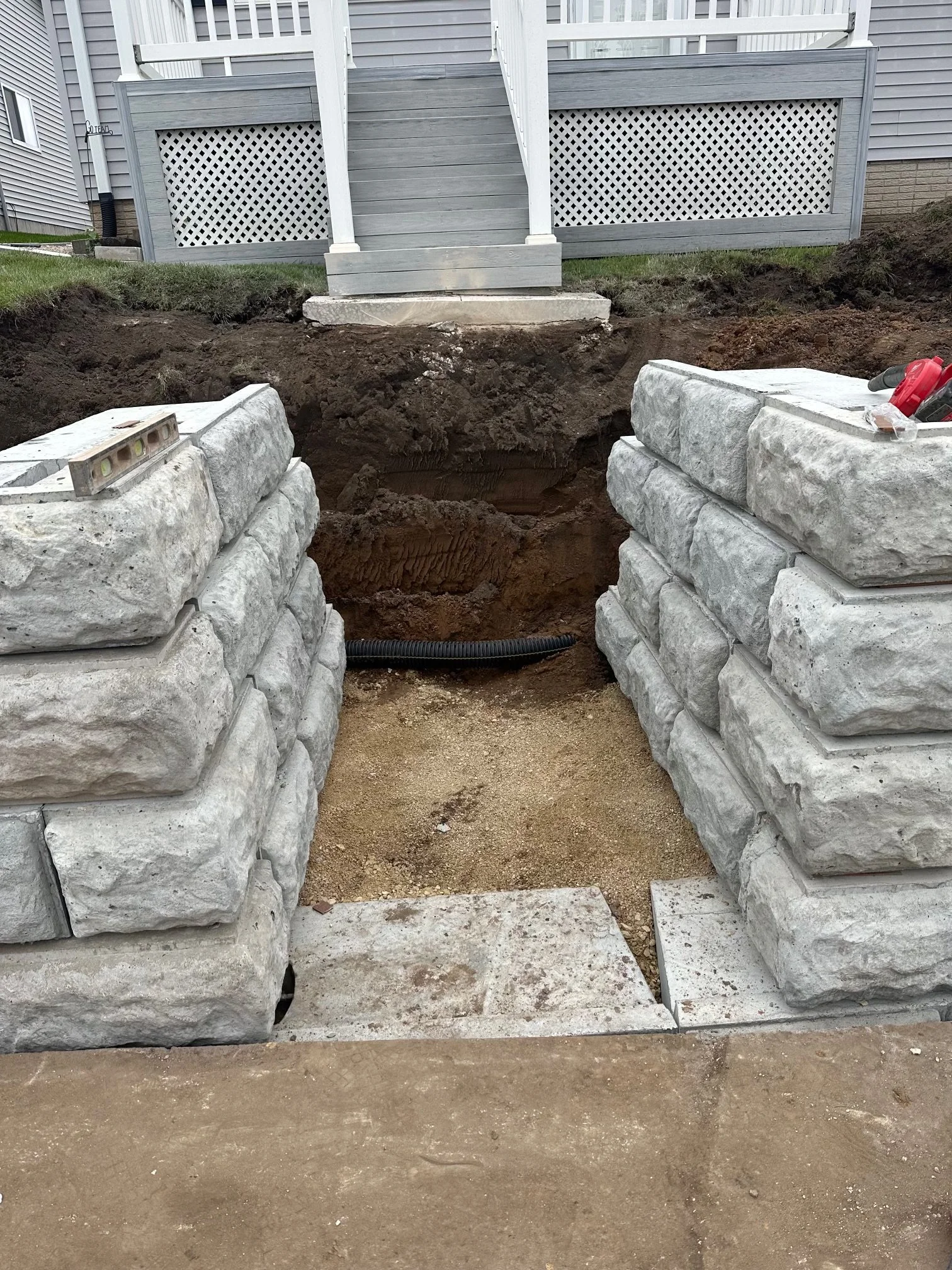
Before a single block went in, we built the drainage. That meant drain tile, clean gravel behind and below the wall, and outlets so water has somewhere to go. Then we built a level, compacted gravel base for the wall to sit on, checking it with a level and a plate compactor along the way.
None of this shows once the wall is finished. It's also the reason the wall will still be standing years from now.
Setting the New Wall
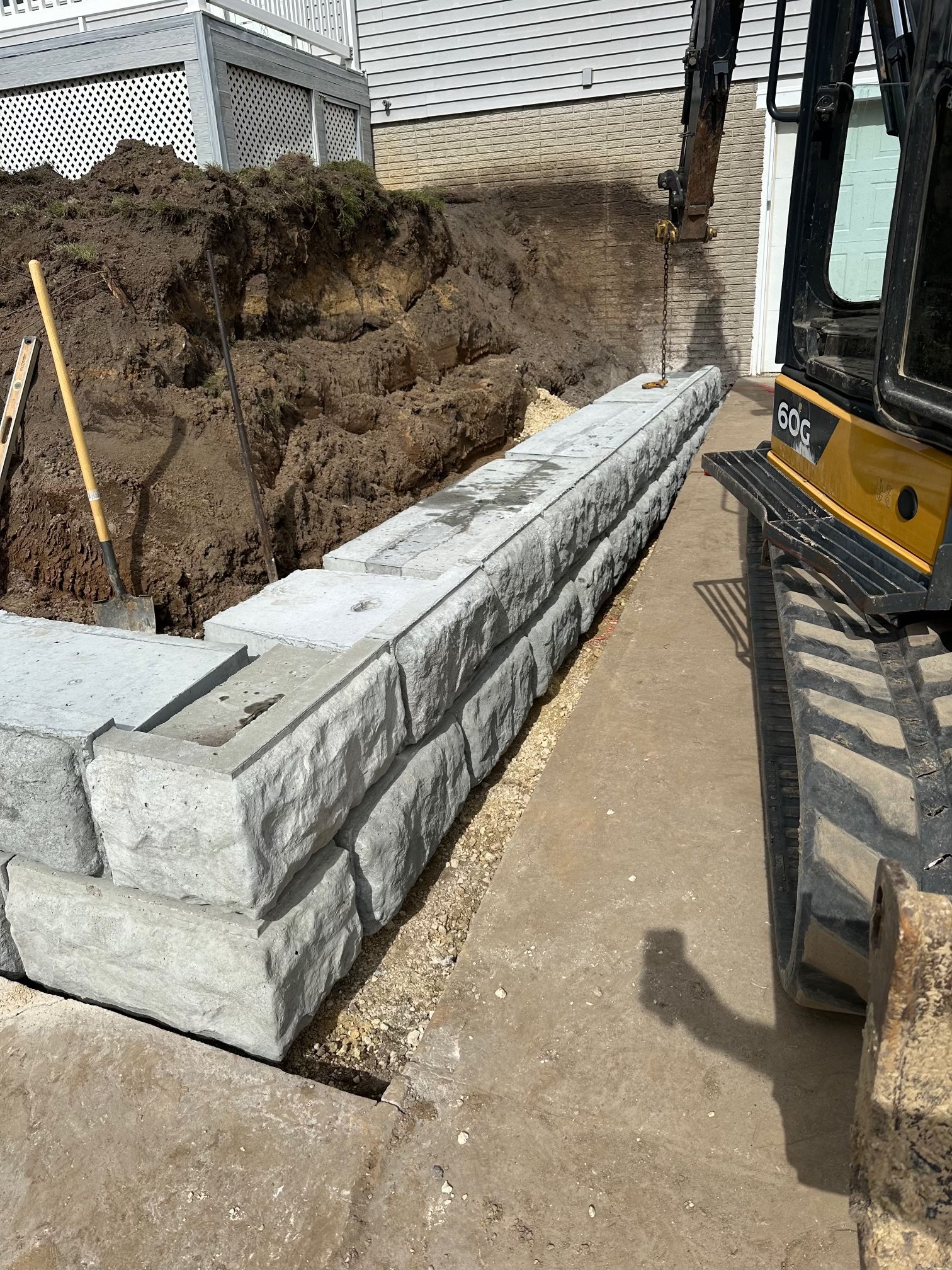
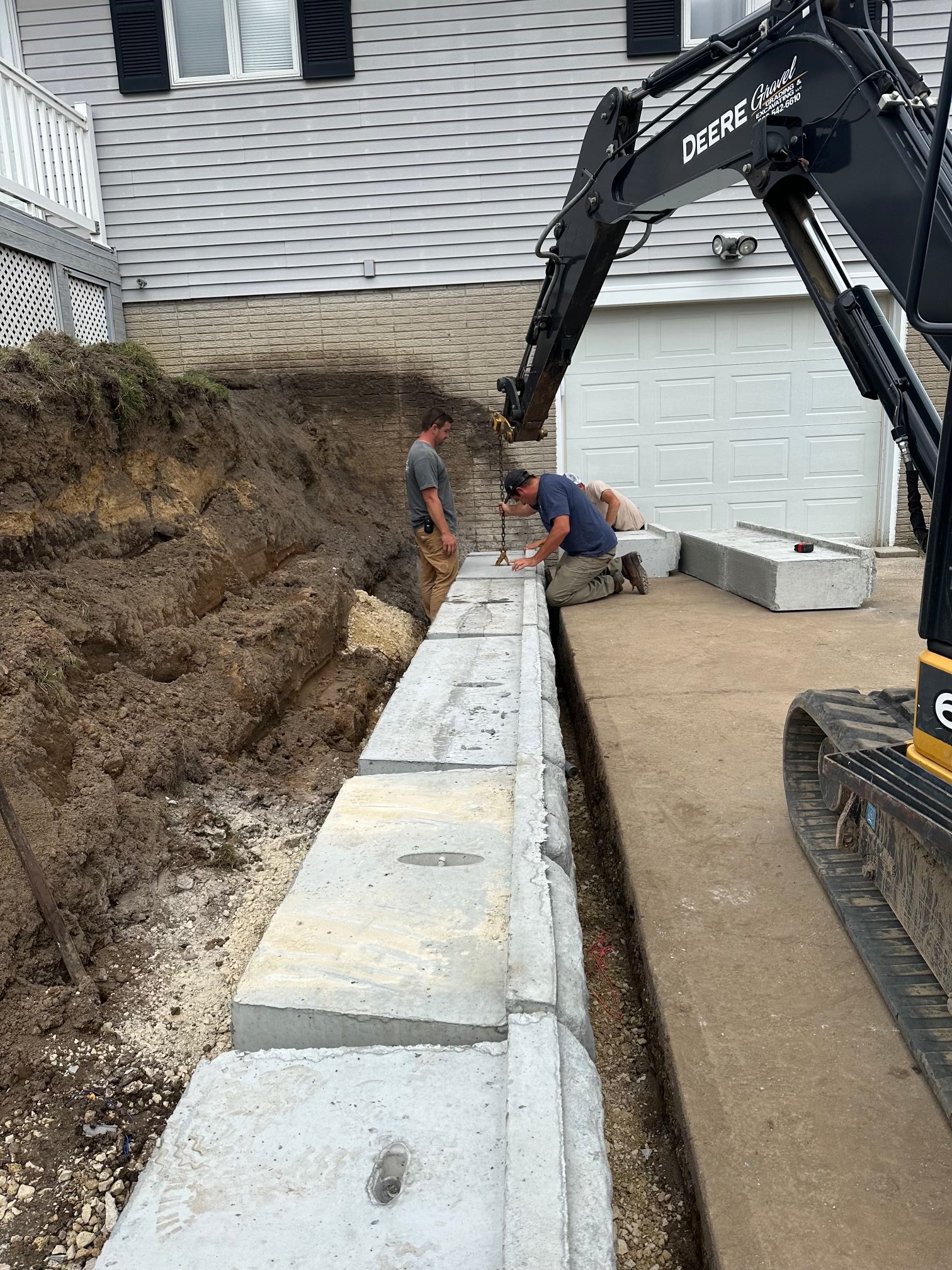
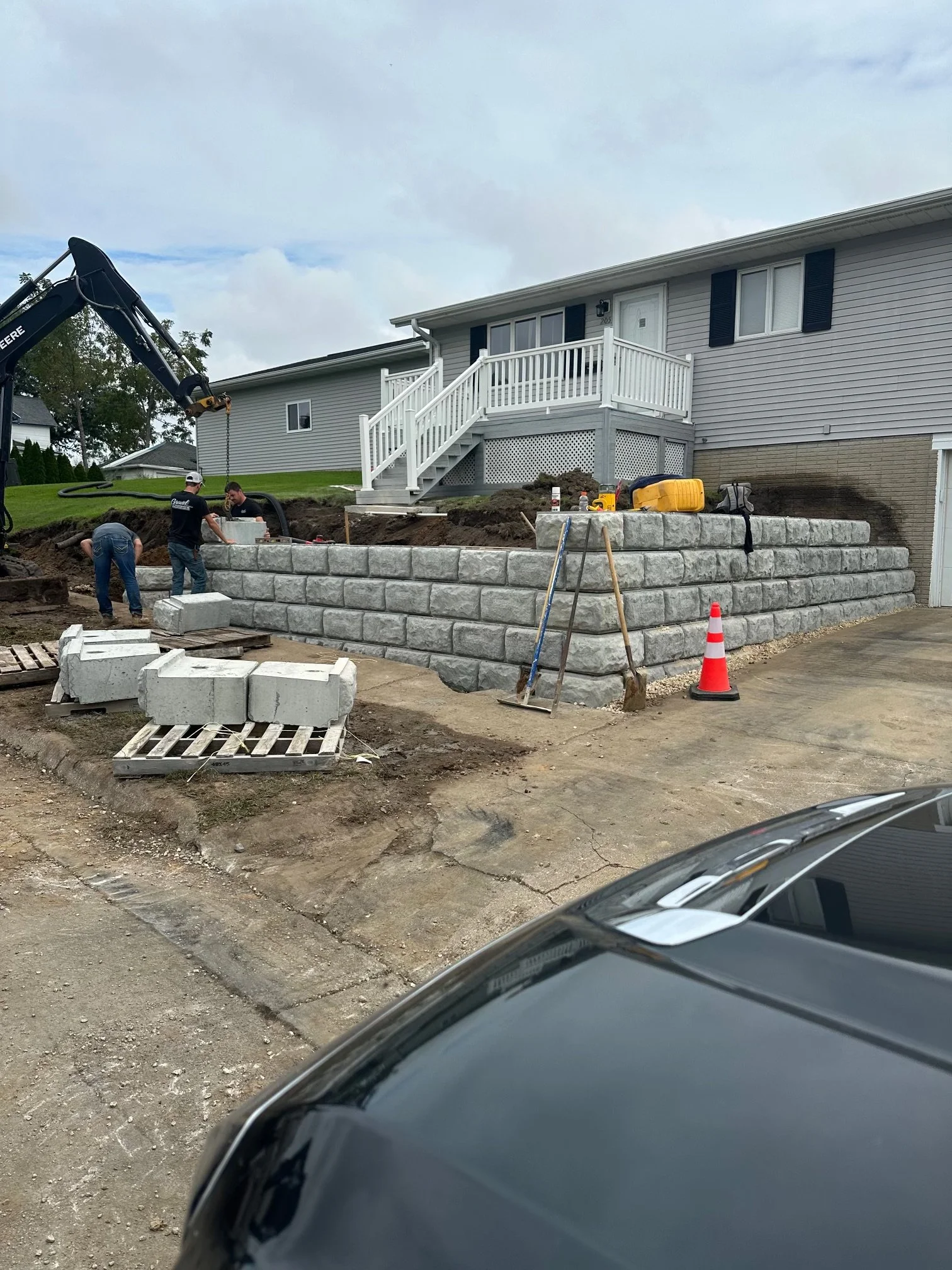
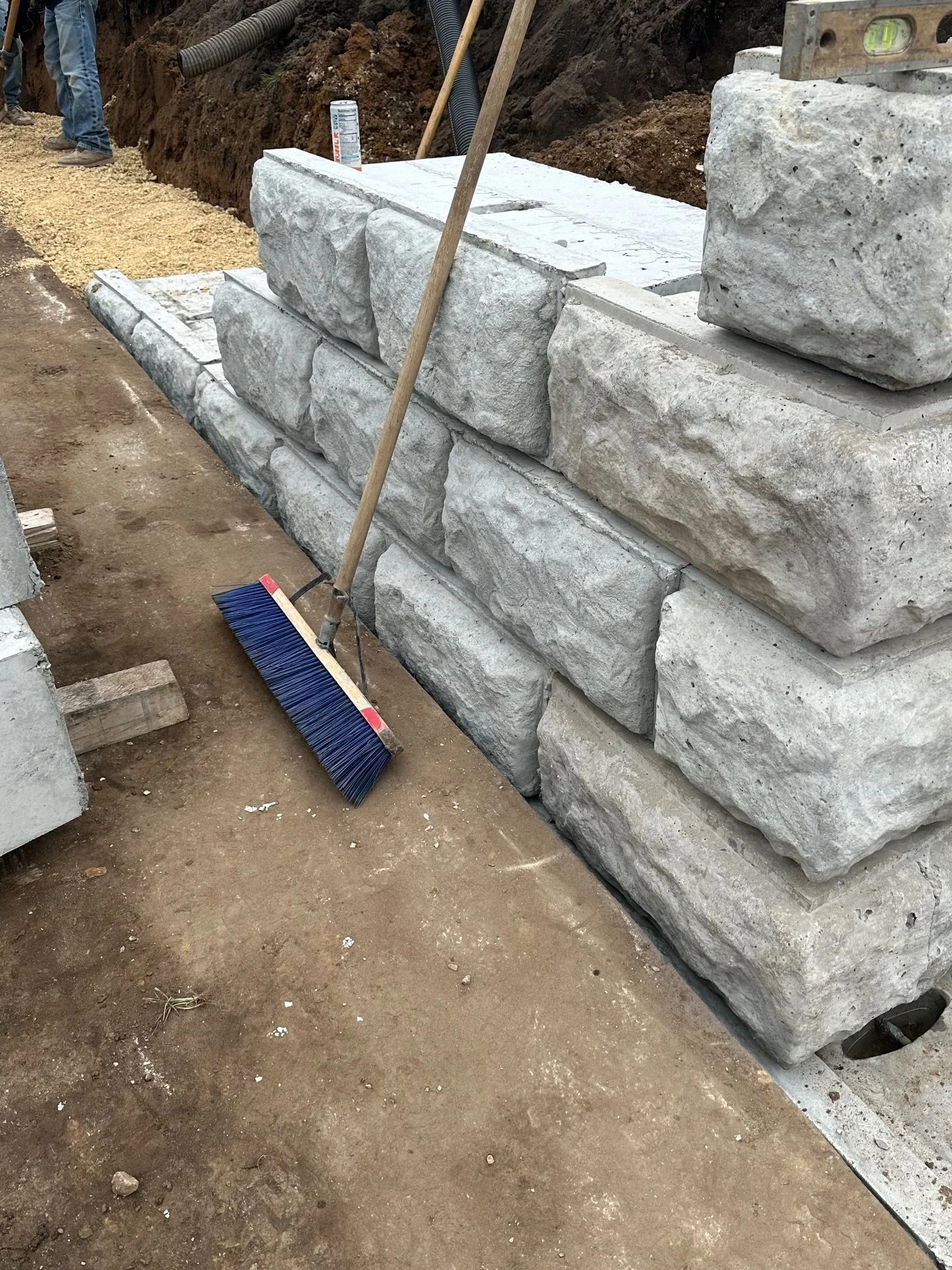
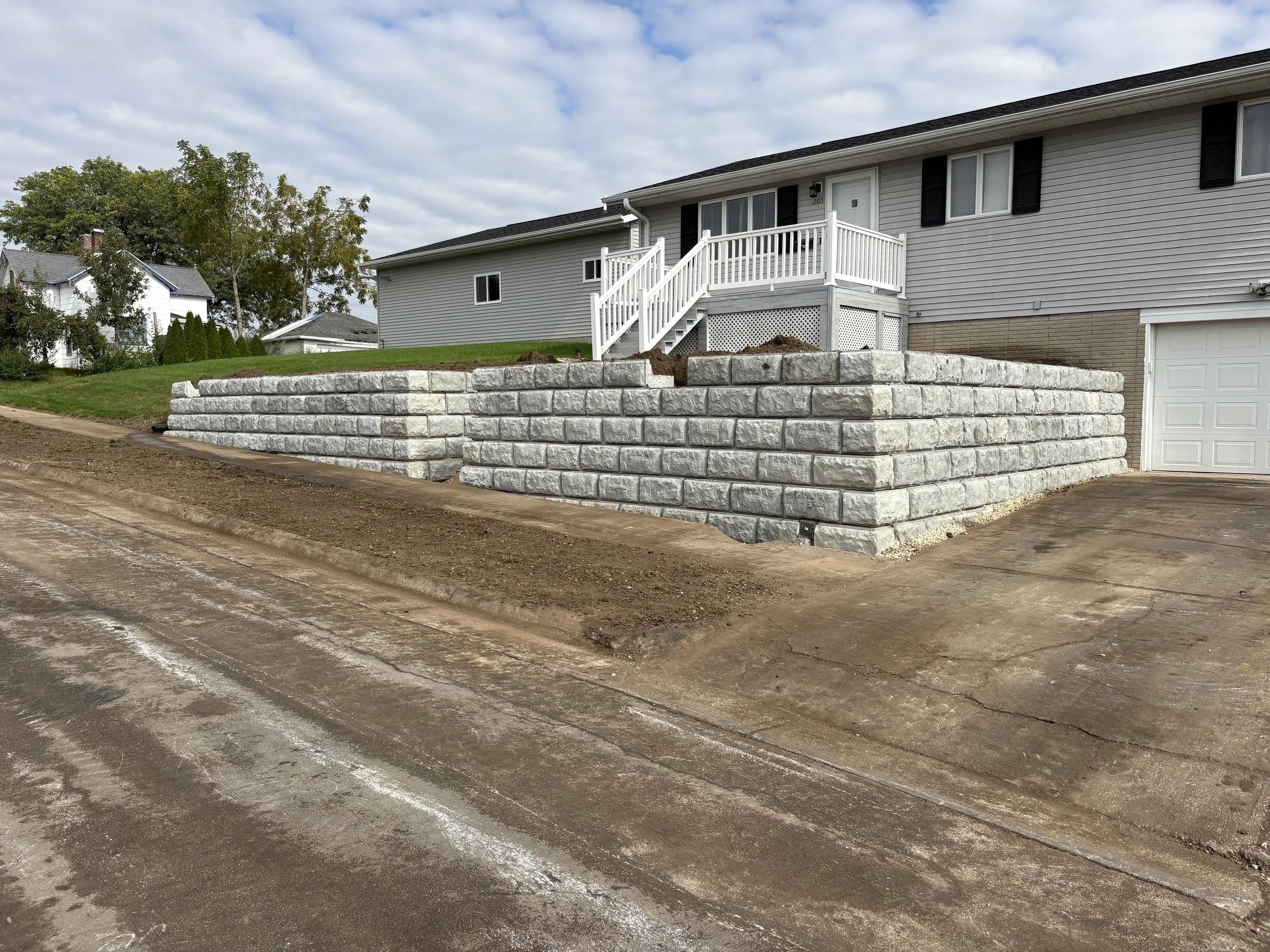
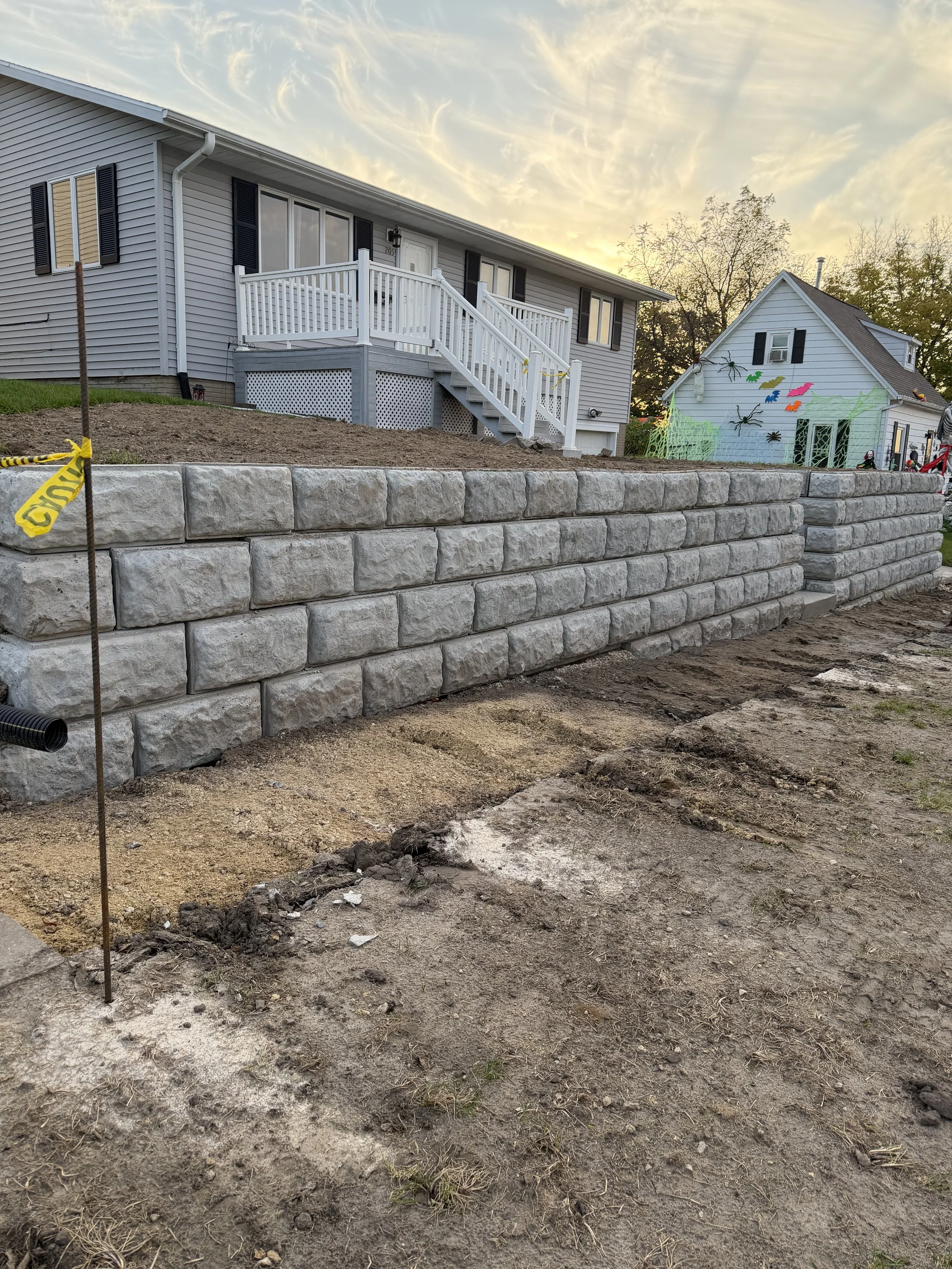
With the base ready, the excavator went from digging to lifting. Each large, rock-faced concrete block was set one at a time using the excavator and a lifting chain, with crew members guiding every block into position.
We checked each course with a level before moving to the next. A wall this size is built row by row, and a small error in the first course gets bigger with every row above it.
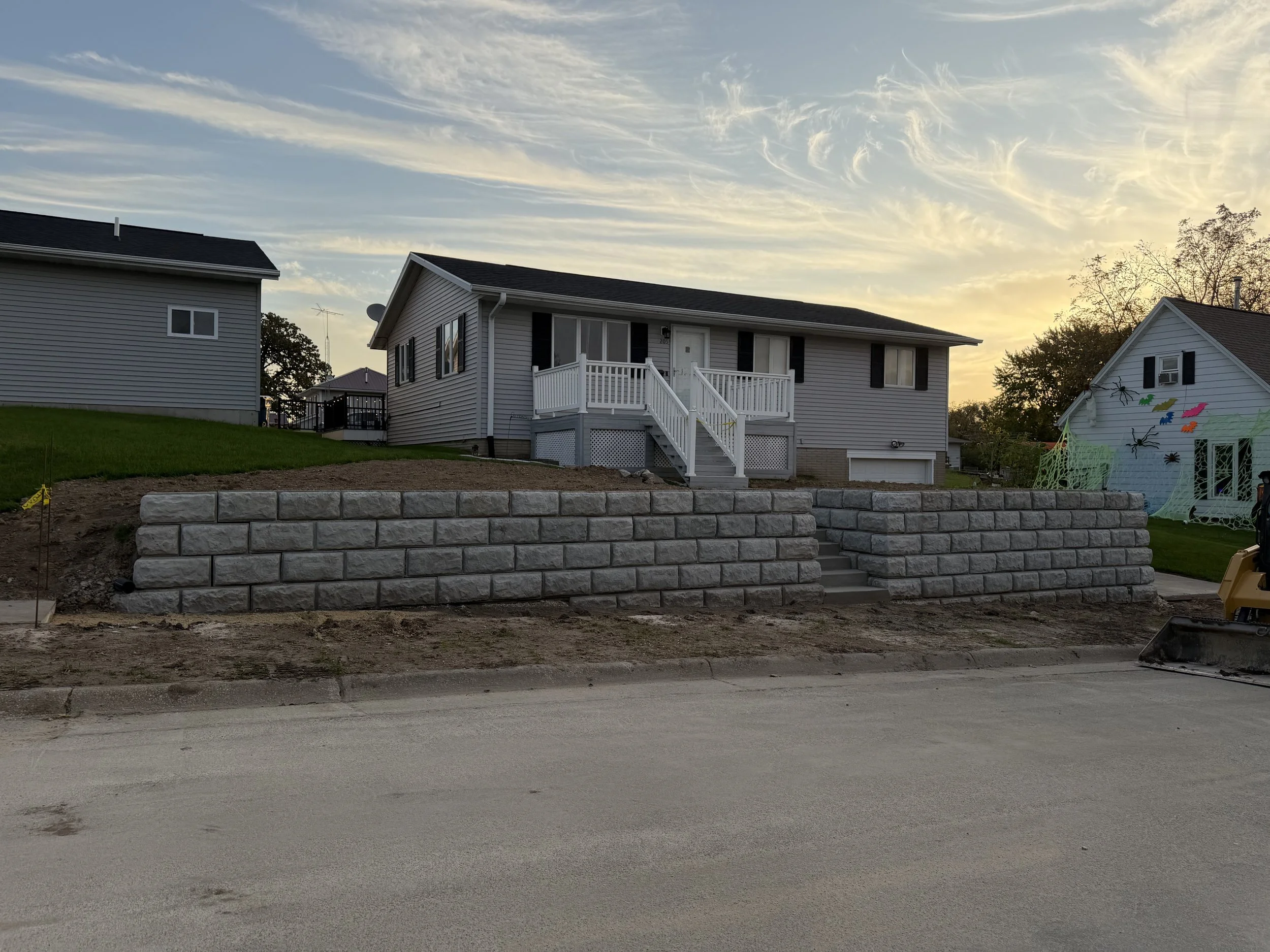
We also built steps right into the wall, giving a clean walkway from the sidewalk up to the yard. The result is a wall that looks like it belongs on the property and does its job quietly.
New Sidewalk, New Driveway, Regraded Yard
Once the wall was up, the rest of the front of the property came together around it. A new concrete sidewalk and a new concrete driveway went in, tied cleanly into the wall.
Then we regraded the yard above the wall. Grading is what points water away from the house, the wall, and the driveway, so it's as important as the wall itself. The slope is now shaped, smooth, and ready for final landscaping when spring arrives.
Why Fall Is a Good Time for Retaining Wall and Drainage Work
Fall is a smart window for projects like this. The ground is firm, equipment moves easily, and the work gets finished before the freeze. Come spring, you're landscaping instead of waiting out the mud.
If you have a leaning or cracking retaining wall, a driveway or sidewalk that's breaking up, or water going where it shouldn't, don't wait for it to get worse. Gravel Grading & Excavating handles retaining walls, drainage, grading, driveways and accesses, and excavation for homes, farms, and acreages around Cascade and eastern Iowa.
Call Terry at 563-542-6610 and get on the schedule. We’ll move the earth for you.