
That Wet Corner of Your Field Isn't Going to Fix Itself.
You know the spot. Every farmer in Eastern Iowa does.
It's the same patch every single year. The corn comes in short and yellow while everything around it looks fine. You slow down when you get close to it with the planter. You hold your breath during harvest. You've lost count of how many times you've pulled equipment out of that mud.
And every spring, you think: maybe this year will be different.
It won't. Not without ag tile.
So What Is Ag Tile, Exactly?
Ag tile is a network of perforated plastic tubing installed below the soil surface that does one job: moves water out of your root zone and off your field.
Water enters the tile through small perforations in the pipe, flows by gravity through the system, and outlets into a ditch, pond, creek, or stream at a lower elevation. The wet spot drains. The field dries out. Your roots get the oxygen they need. Your yields stop taking a hit in that corner.
It's not complicated. It's just been sitting there waiting for you to pull the trigger.
Why Eastern Iowa Fields Need It More Than Most
Clay-heavy Eastern Iowa soil holds water like it's trying to win a competition. Unlike sandier ground, it doesn't let moisture move through naturally — which means when it rains hard or spring comes in wet, your field stays saturated long after it should have dried out.
A properly installed ag tile system changes that. Here's what Eastern Iowa farmers actually see after tiling their ground:
Better yields — roots that aren't drowning actually develop the way they're supposed to
Earlier fieldwork in the spring — tiled ground dries faster, and getting in a week earlier matters
Topsoil that stays put — improved drainage means less sheet erosion and less of your best soil ending up in the ditch
Less compaction — fewer muddy passes means less equipment stress and fewer ruts to deal with come fall
Healthier root systems — oxygen can actually reach your roots when they're not sitting in water
No more salt buildup — excess moisture concentrates harmful salts in the root zone over time; tile fixes that too
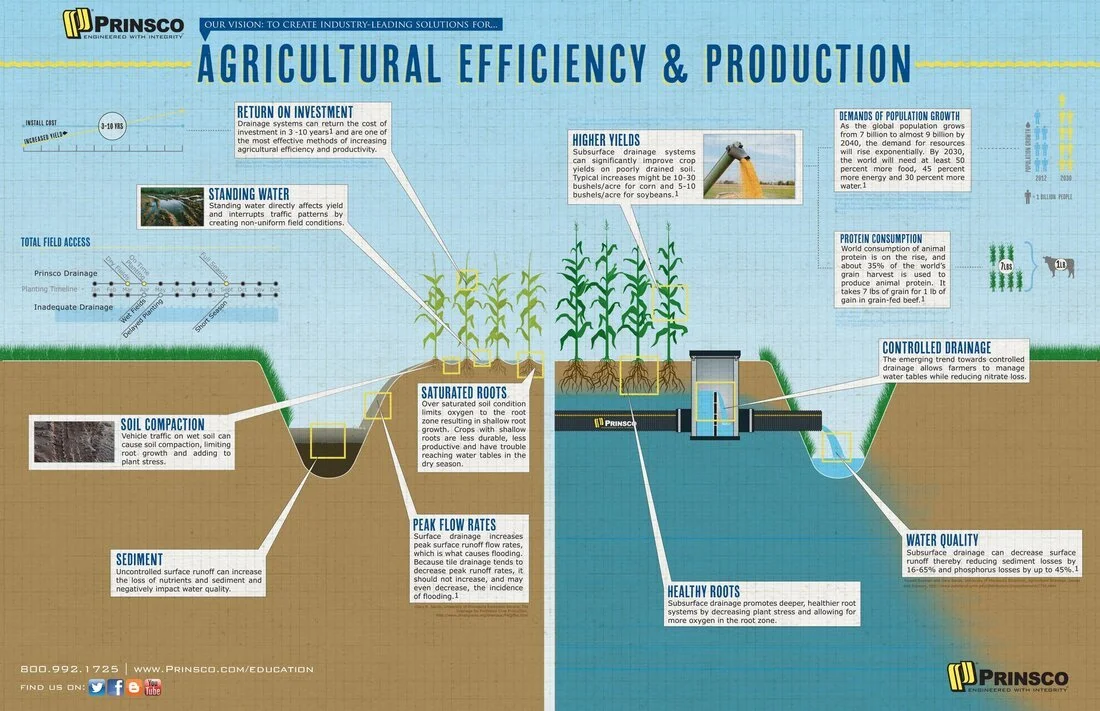
Illustration from our friends at Prinsco
Is It Right for Your Ground?
Probably. But here's what actually determines it:
Soil type — The higher your clay content, the more tile lines you need and the closer together they should run. Sandy ground drains on its own. Eastern Iowa clay does not.
Field topography — Where your ground naturally slopes and where water naturally wants to go determines how we map the system and where it outlets. Every field is a little different.
What you're growing — Different crops have different water tolerances. A tile system should be designed around your operation, not just dropped in and hoped for.
Local regulations — Iowa has drainage district rules, and some projects require permits or approval before you break ground. Worth knowing before you start.
Pattern Tile vs. Random Tile — What's the Difference?
Random tile targets specific wet spots with individual lines — useful if you've got one or two problem areas.
Pattern tile covers the entire field in a systematic grid. From the air it looks like a work of art. On the ground it performs like one. If your drainage problem is widespread (and in Eastern Iowa, it usually is) pattern tile is almost always the better long-term investment.
What a Professional Install Actually Looks Like
A lot goes into a quality ag tile job before the first bucket of dirt moves:
Walking and assessing the field — we don't guess at your drainage plan
Mapping the system based on topography, soil type, and outlet location
Using laser grading tools to dial in proper slope throughout the entire system
Installing tile at the right depth for your soil and frost conditions
Backfilling and finishing the surface so the field is back in production as fast as possible
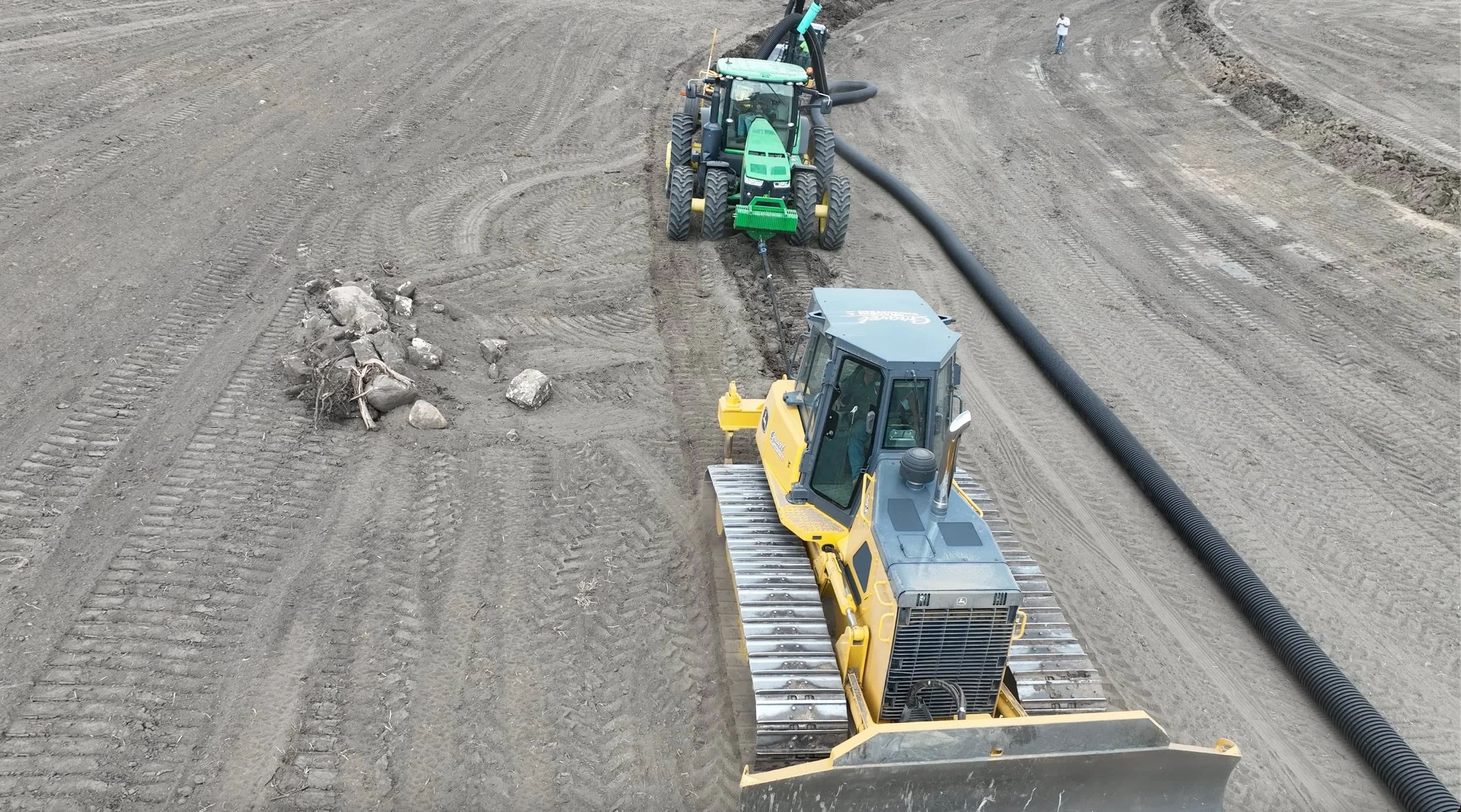
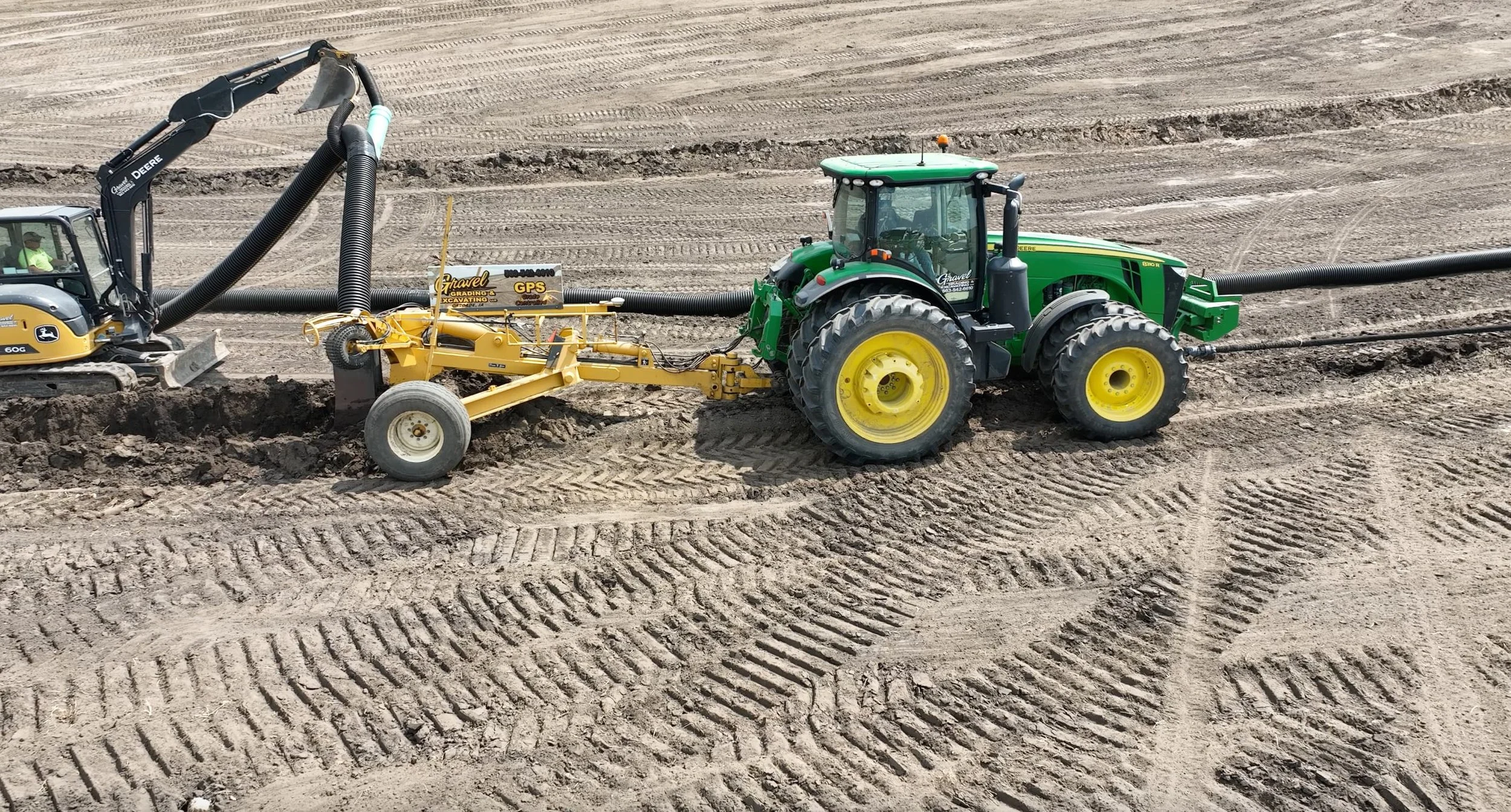
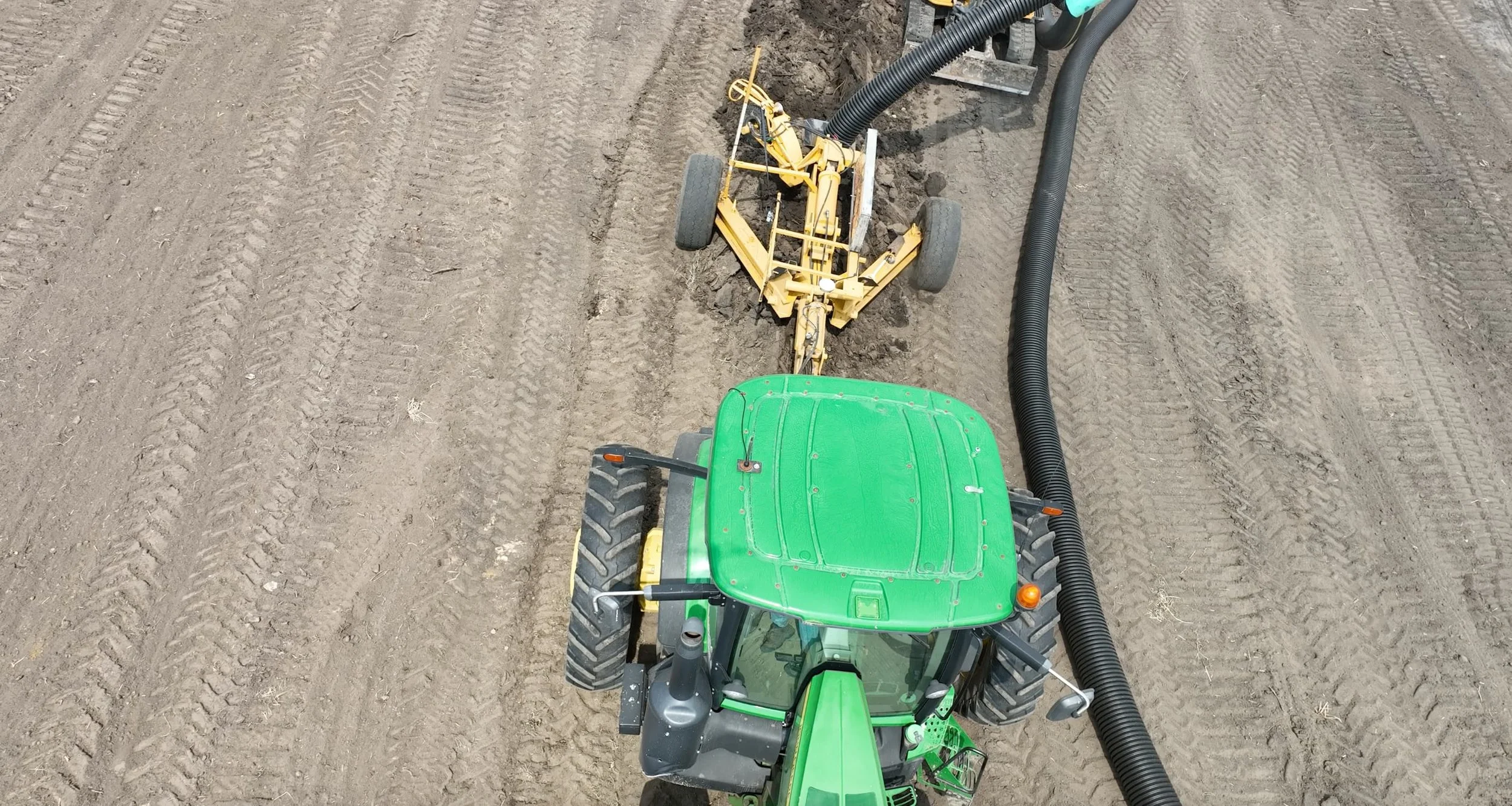
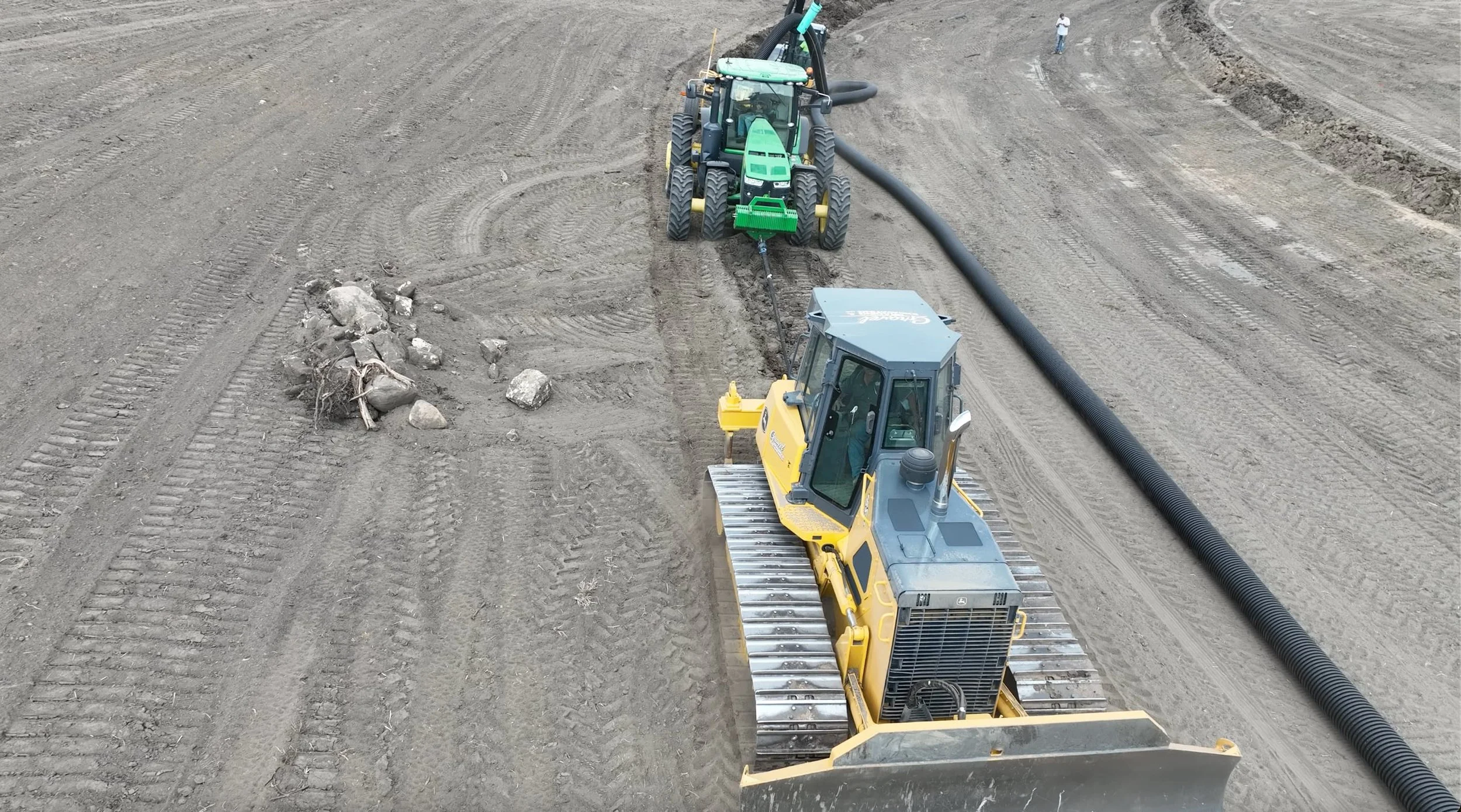
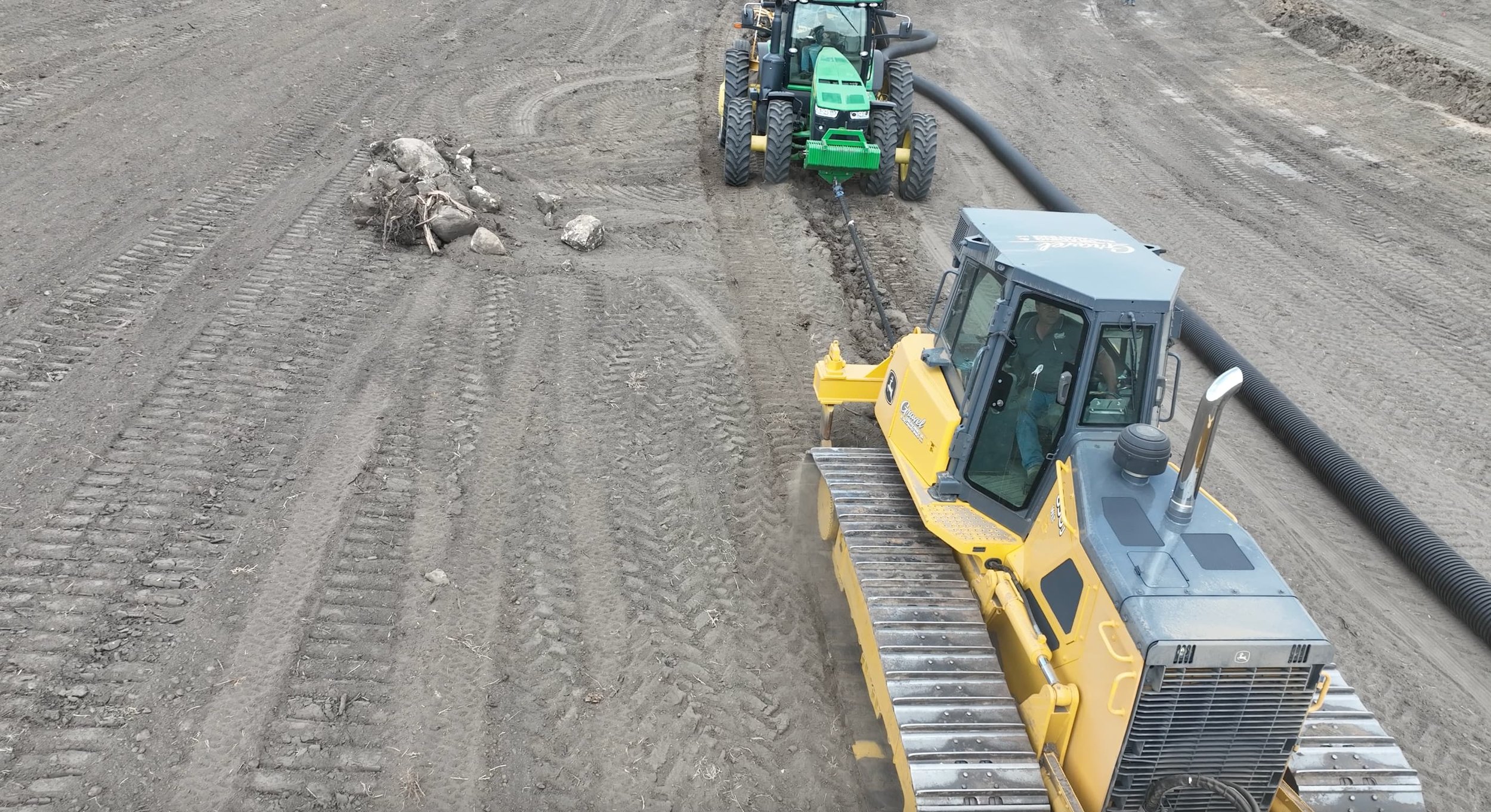
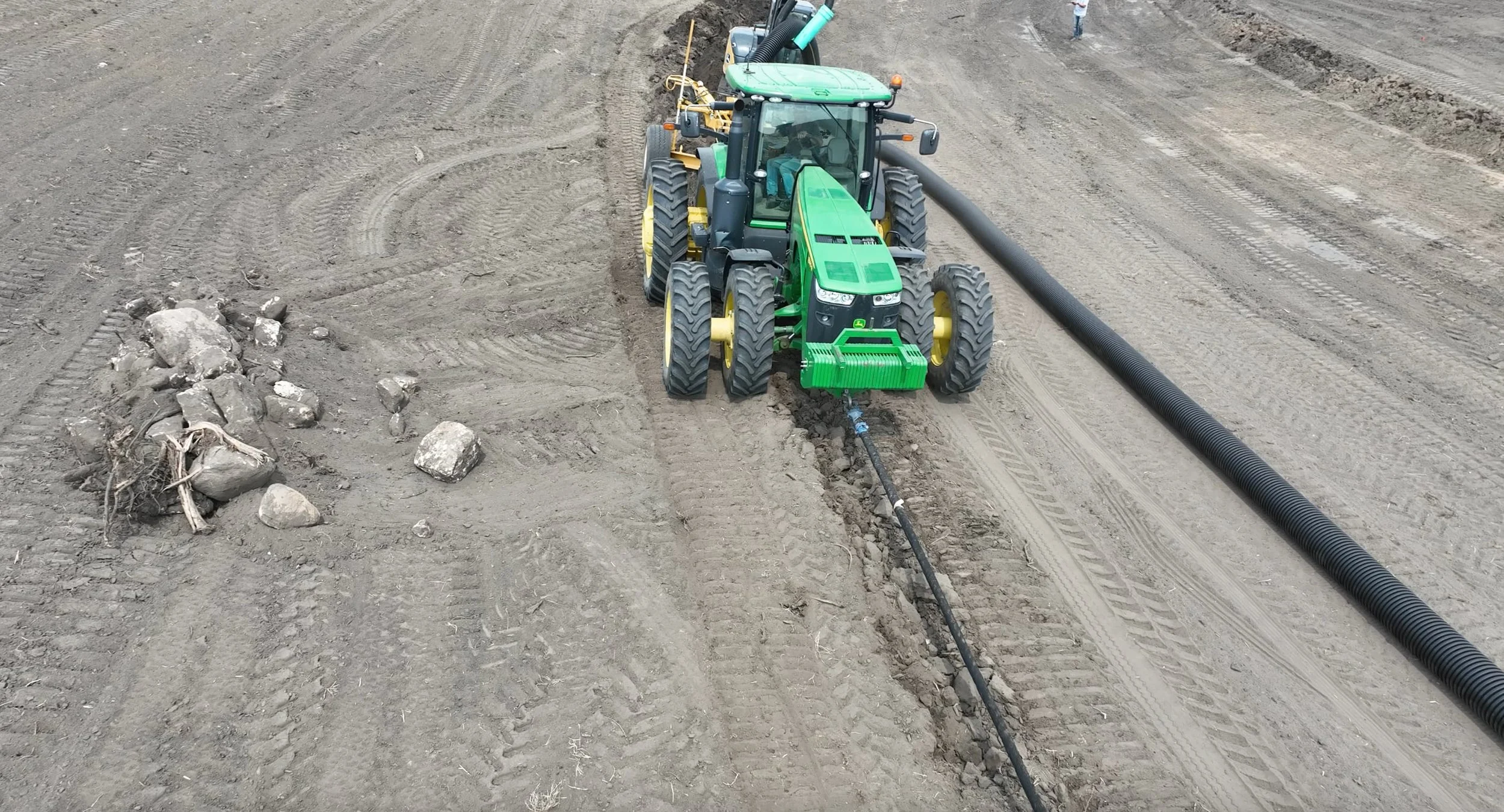
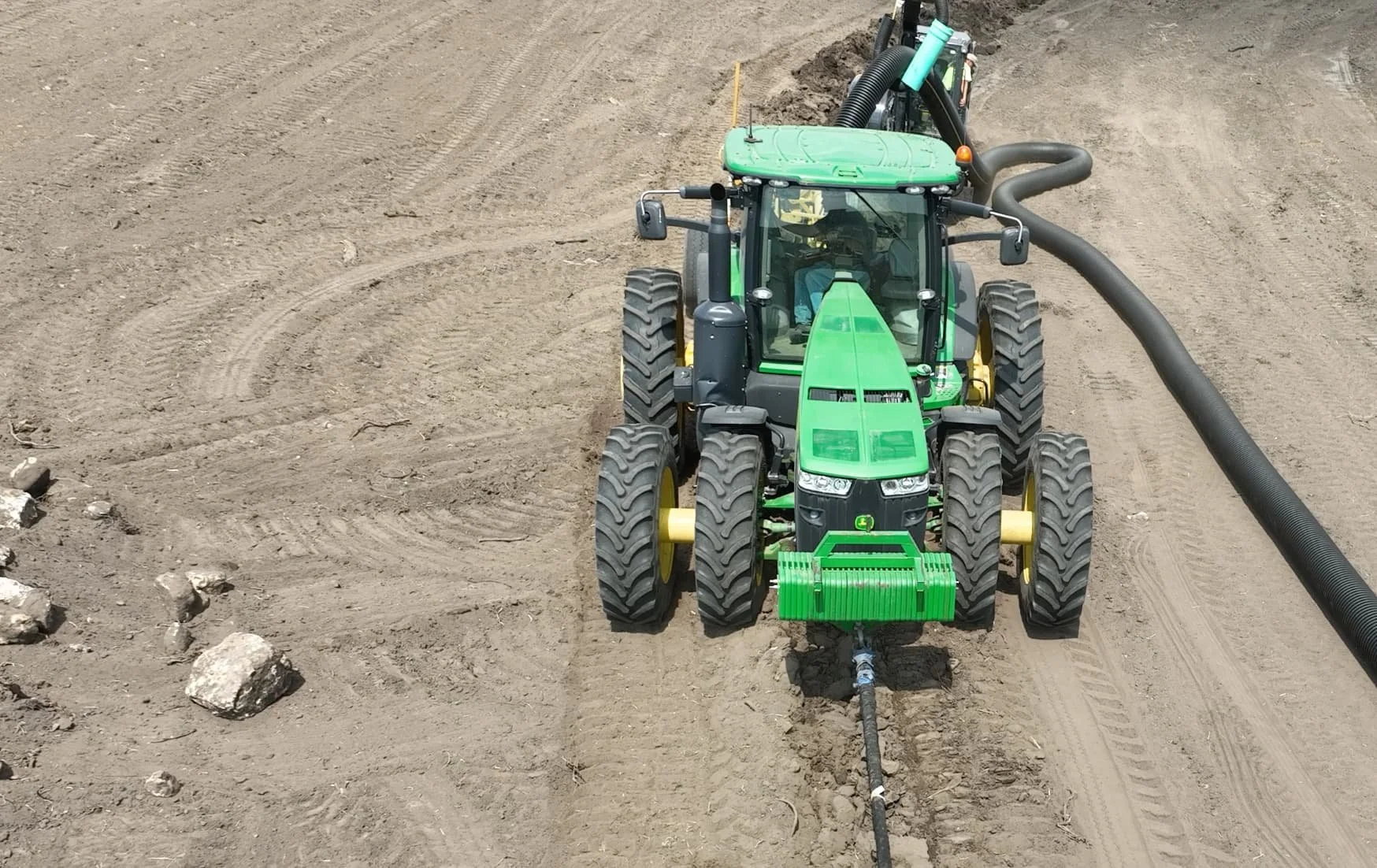
We run a dozer, tractor, and mini excavator on a full ag tile job — and watching that crew work in tandem is something worth seeing. We've been doing this across Dubuque, Delaware, Jones, Jackson, and Buchanan counties since 2004. We know Eastern Iowa ground because we've been moving it for over 20 years.
Stop Losing Yield to a Problem You Can Fix.
If that wet corner has been costing you money long enough, let's talk. We'll walk the field, map a system that makes sense for your operation, and get you on the schedule.
📞 563-542-6610
Or contact us via email and stop dreading that corner of the field.