
We Replaced a Water Main in Cascade. Here's What That Actually Looks Like.
Most people don't think about their water main until something goes wrong.
You turn on the faucet, water comes out, and that's the end of it. What's happening underground — the aging pipes, the slow corrosion, the pressure losses nobody notices until they do — stays out of sight and out of mind.
Until it can't anymore.
This summer, the City of Cascade made the call to replace the water main on 3rd Ave SE before a deteriorating line became a real problem for the neighborhood. They brought us in to handle the excavation, installation, and site restoration. Here's how a project like that actually comes together.
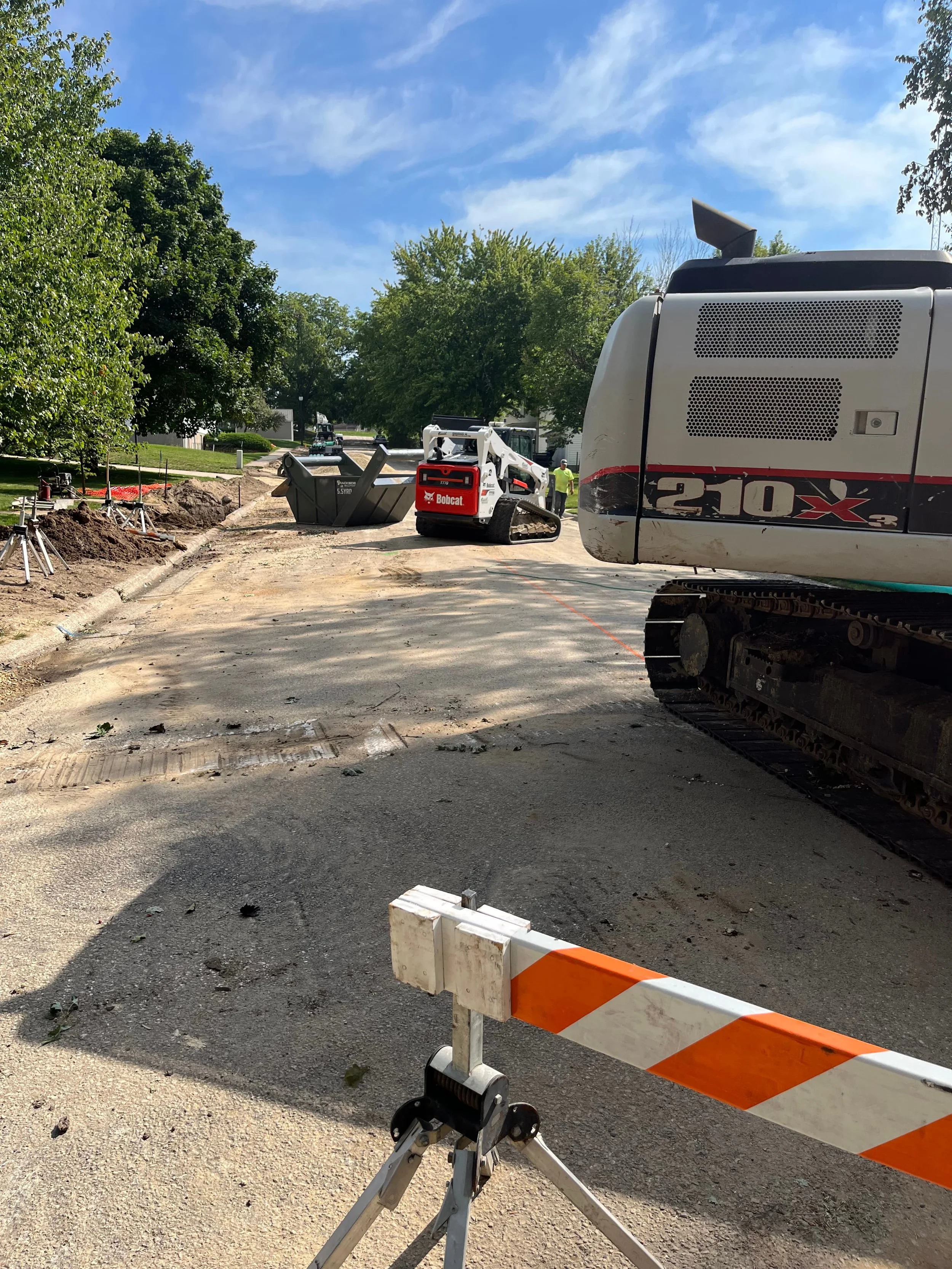
Step 1 — Assessment and Planning (Before We Touch a Thing)
Water main replacement starts long before equipment shows up. Engineers and city officials evaluated the existing main's condition — material degradation, corrosion, capacity, leak history — and determined that replacement was the right call.
That kind of upfront planning matters. You don't want to get halfway through a job and find out the scope is different than expected, especially when a neighborhood's water supply is involved.
Step 2 — Permits, Communication, and Coordination
A water main replacement affects real people. Residents lose water service temporarily. Roads close. Construction noise shows up early in the morning. None of that is a surprise when communication is handled right — and on this project, the City of Cascade did that work well.
Our crew coordinated closely with city officials throughout, making sure permits were in order, utility conflicts were identified ahead of time, and the project stayed on the timeline the neighborhood had been given.
Step 3 — Excavation and Removal
This is where we come in.
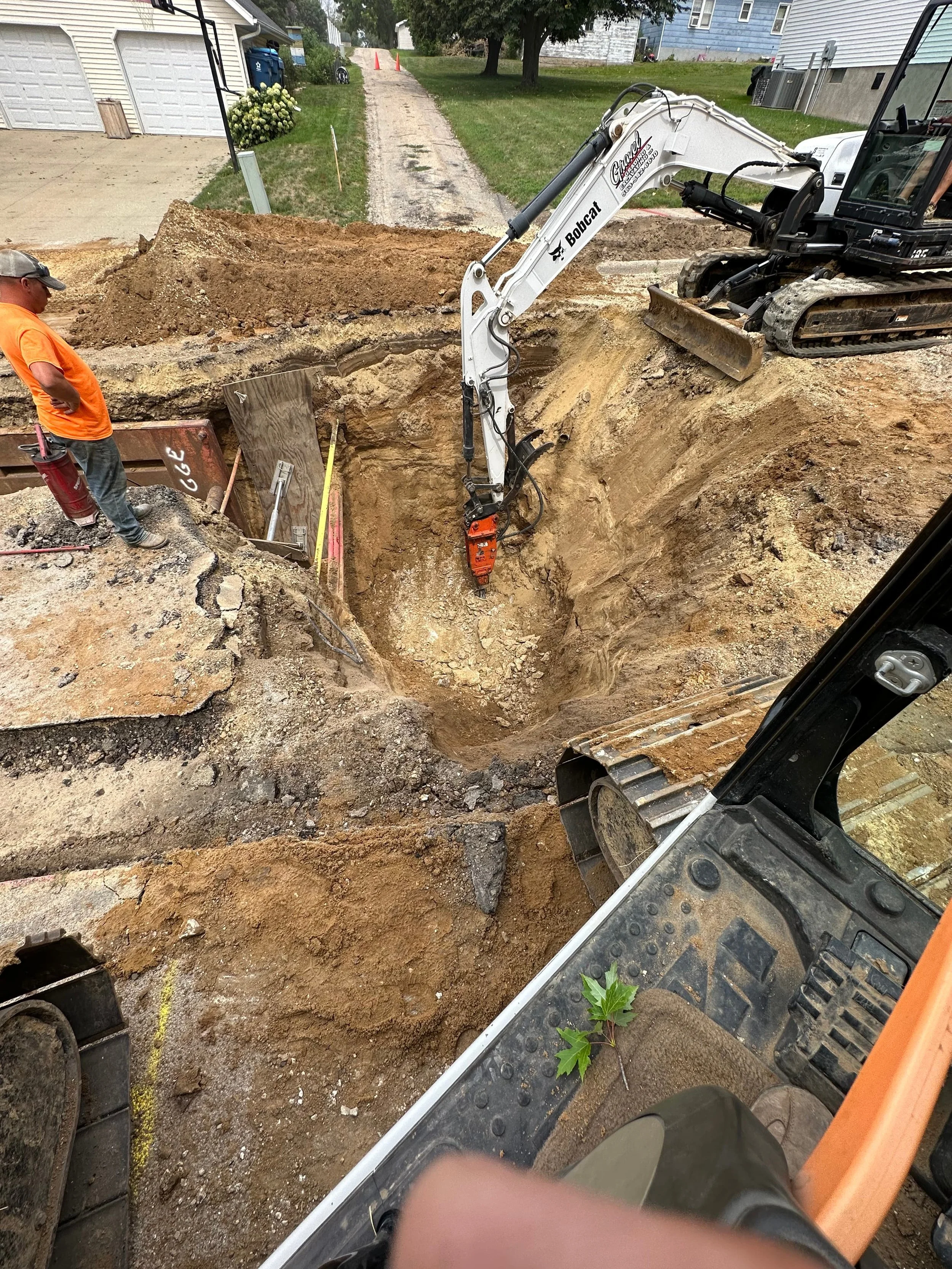
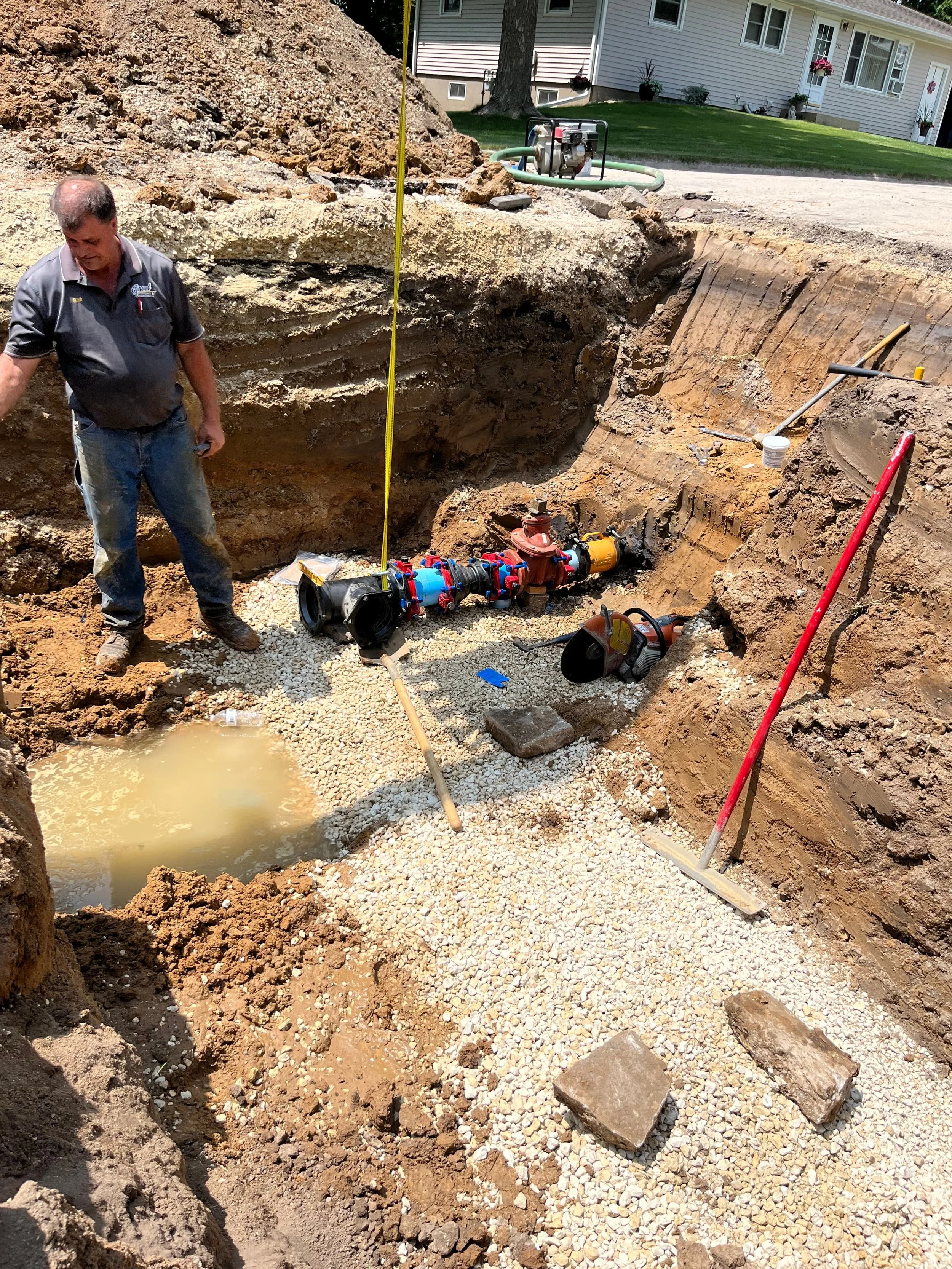
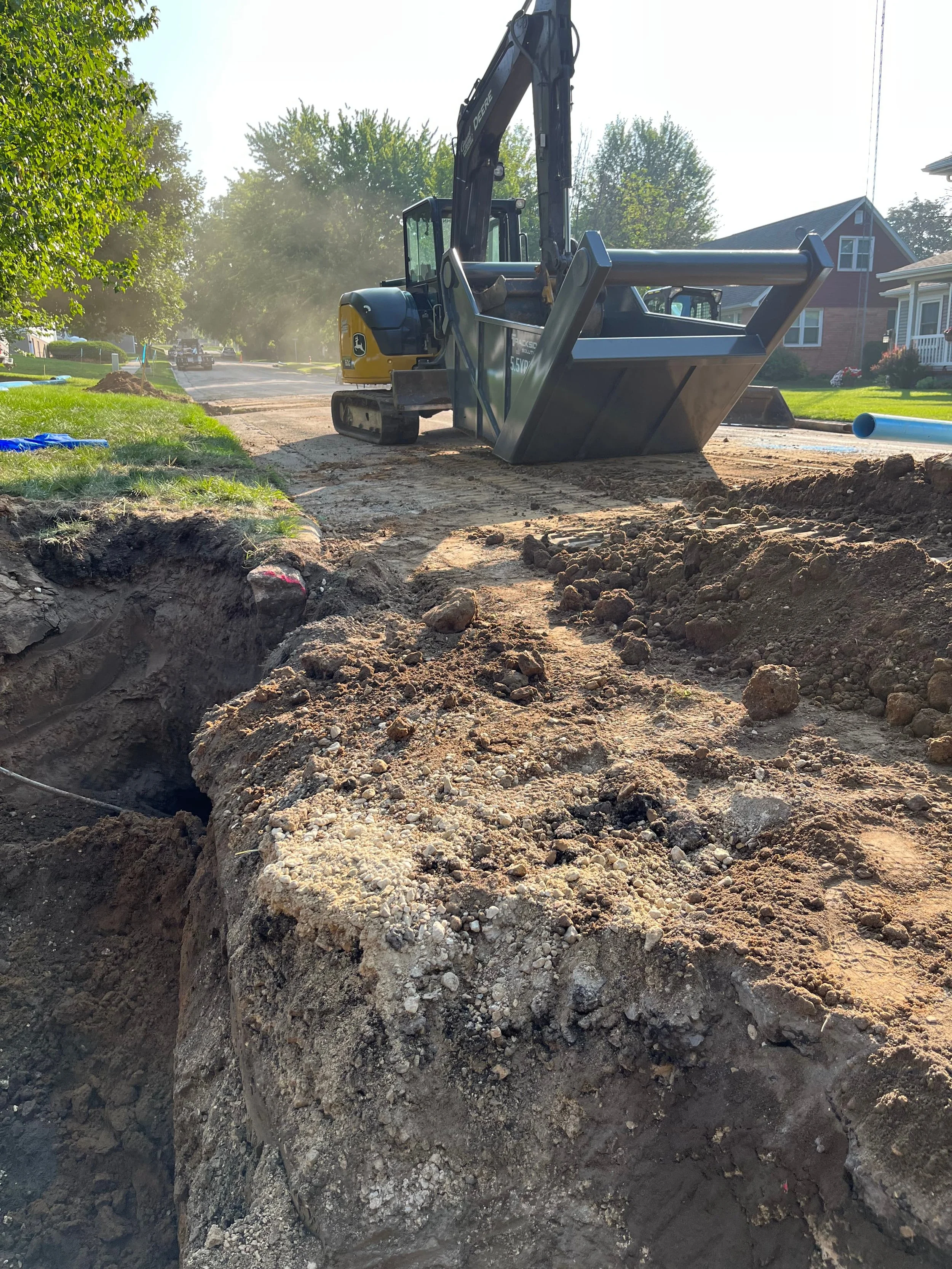
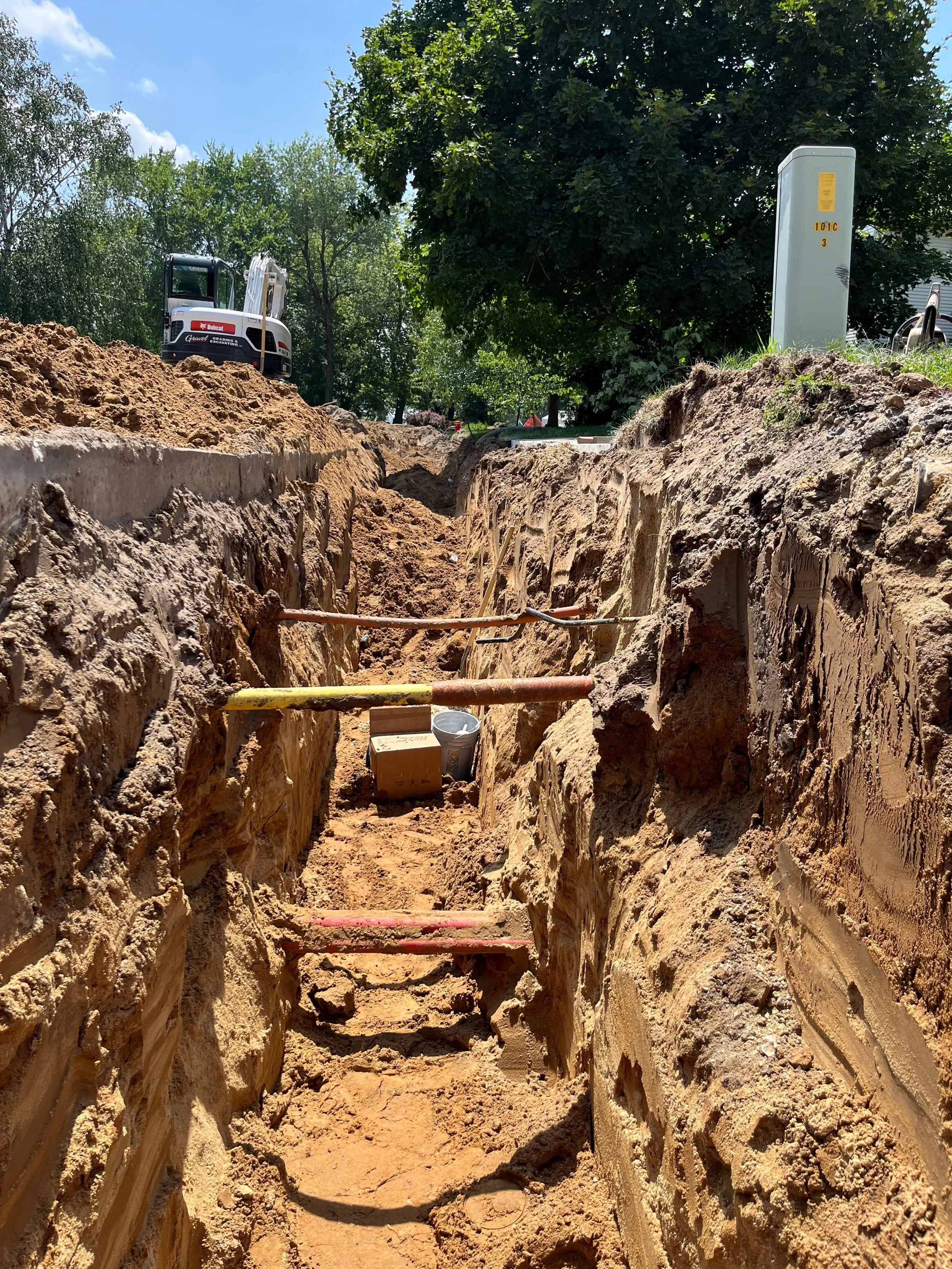
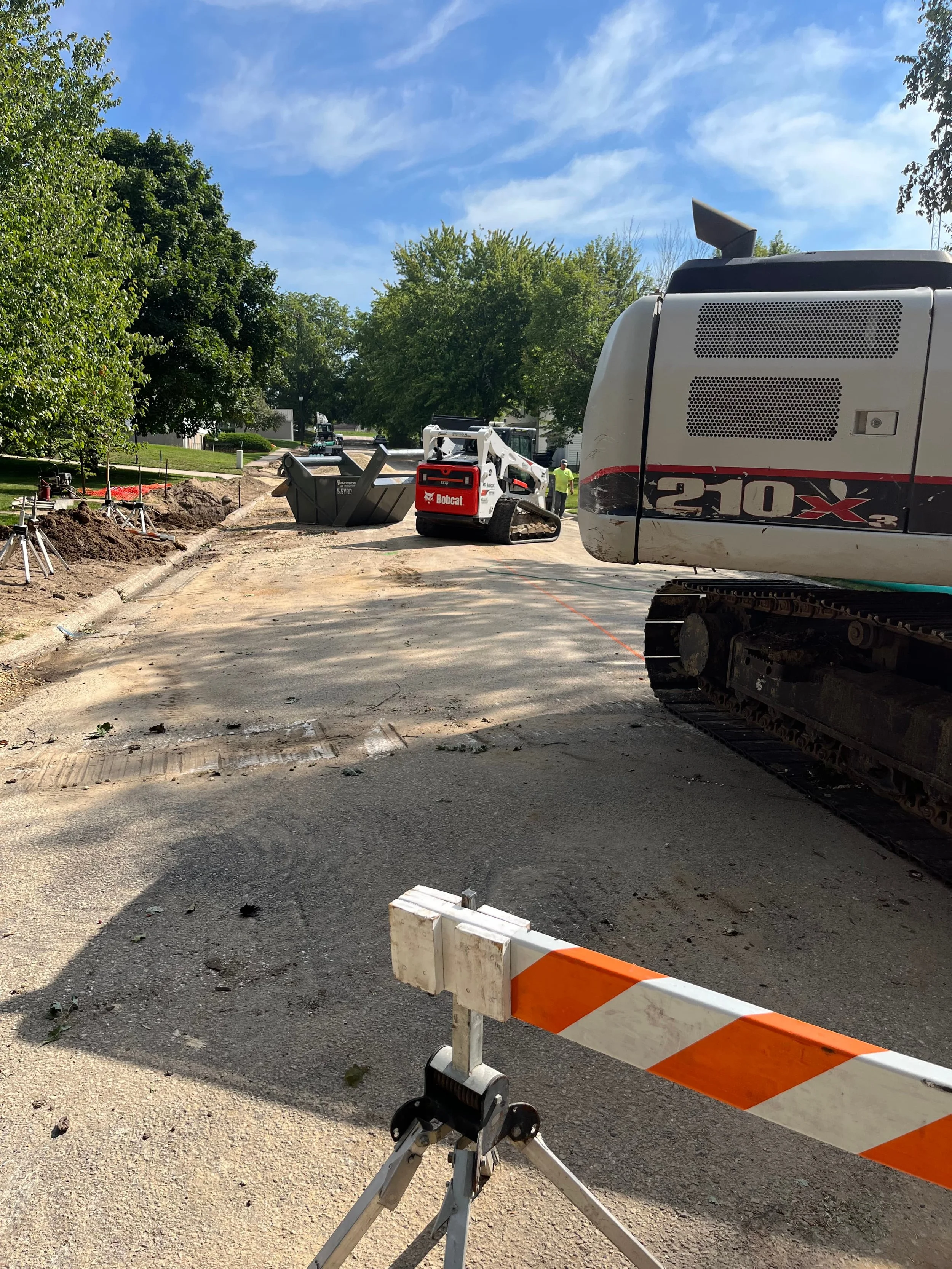
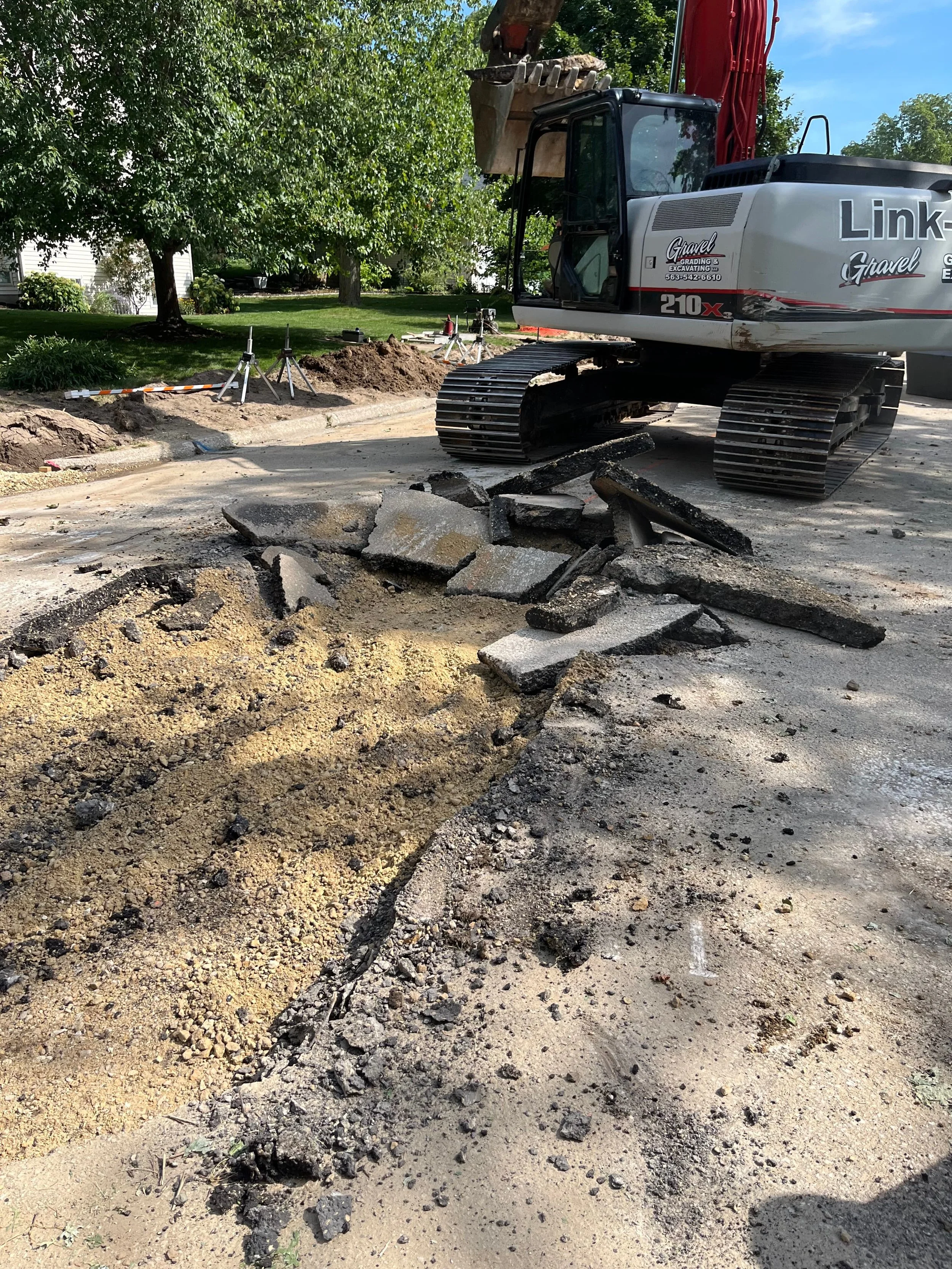
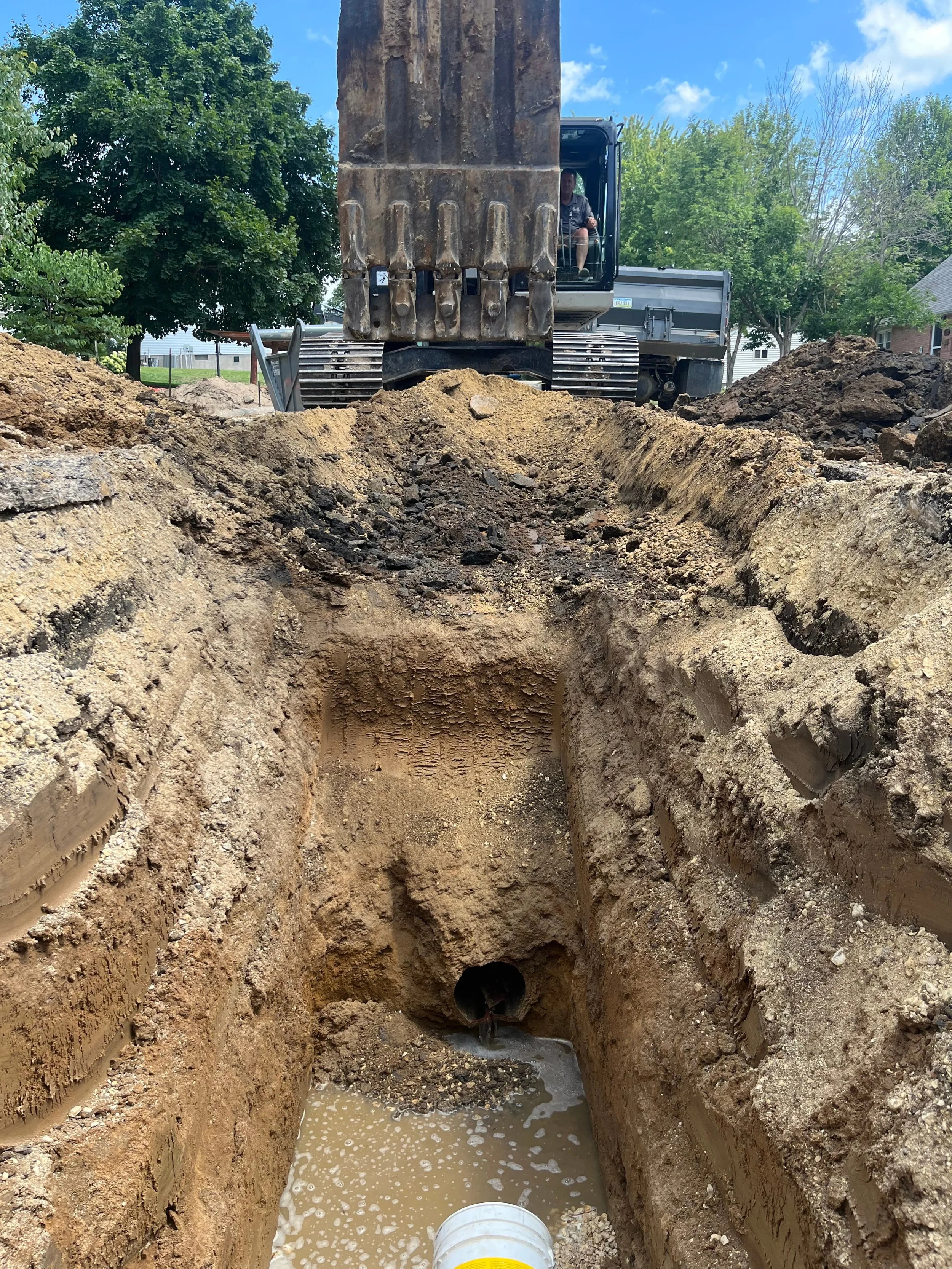
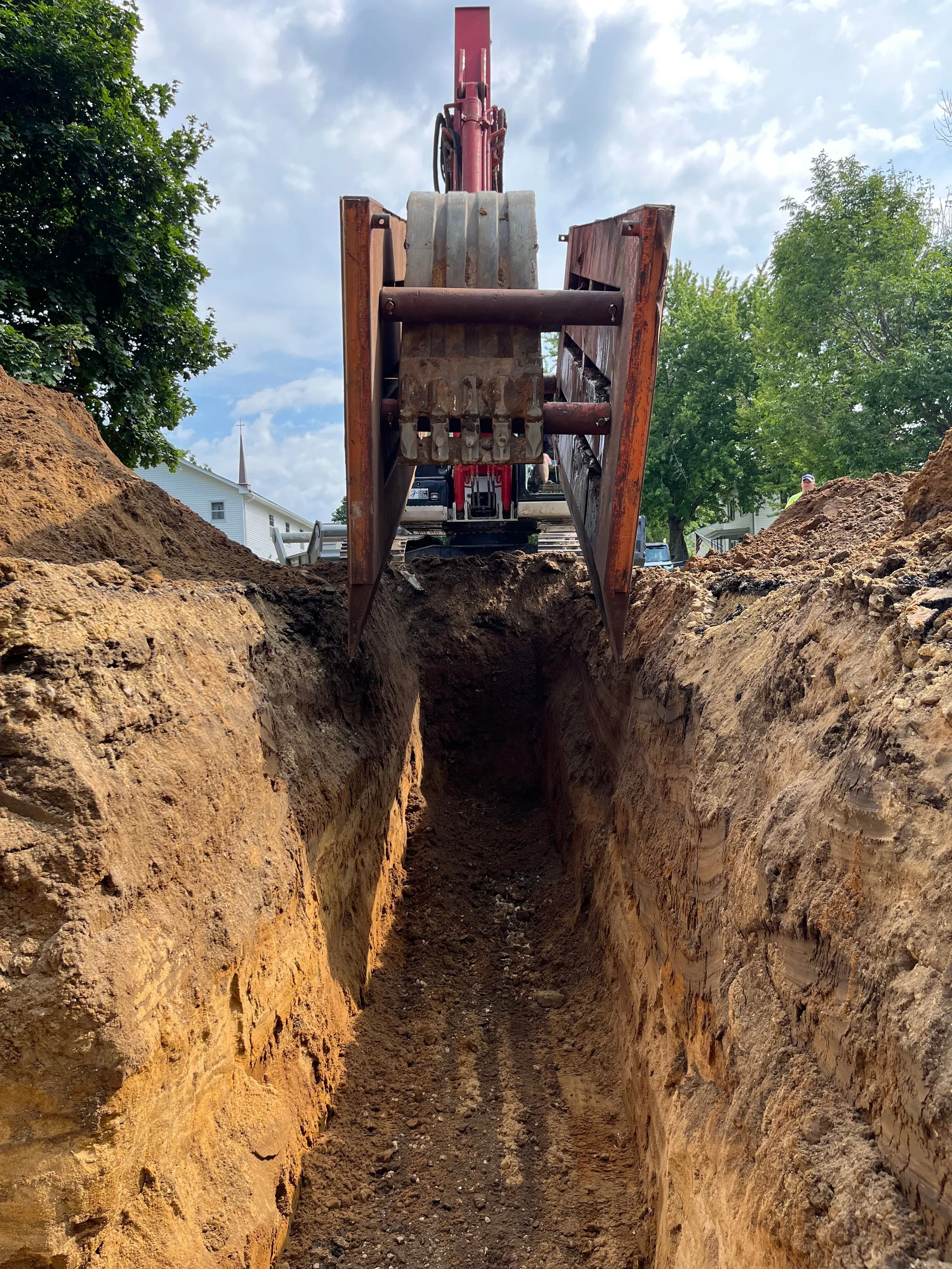
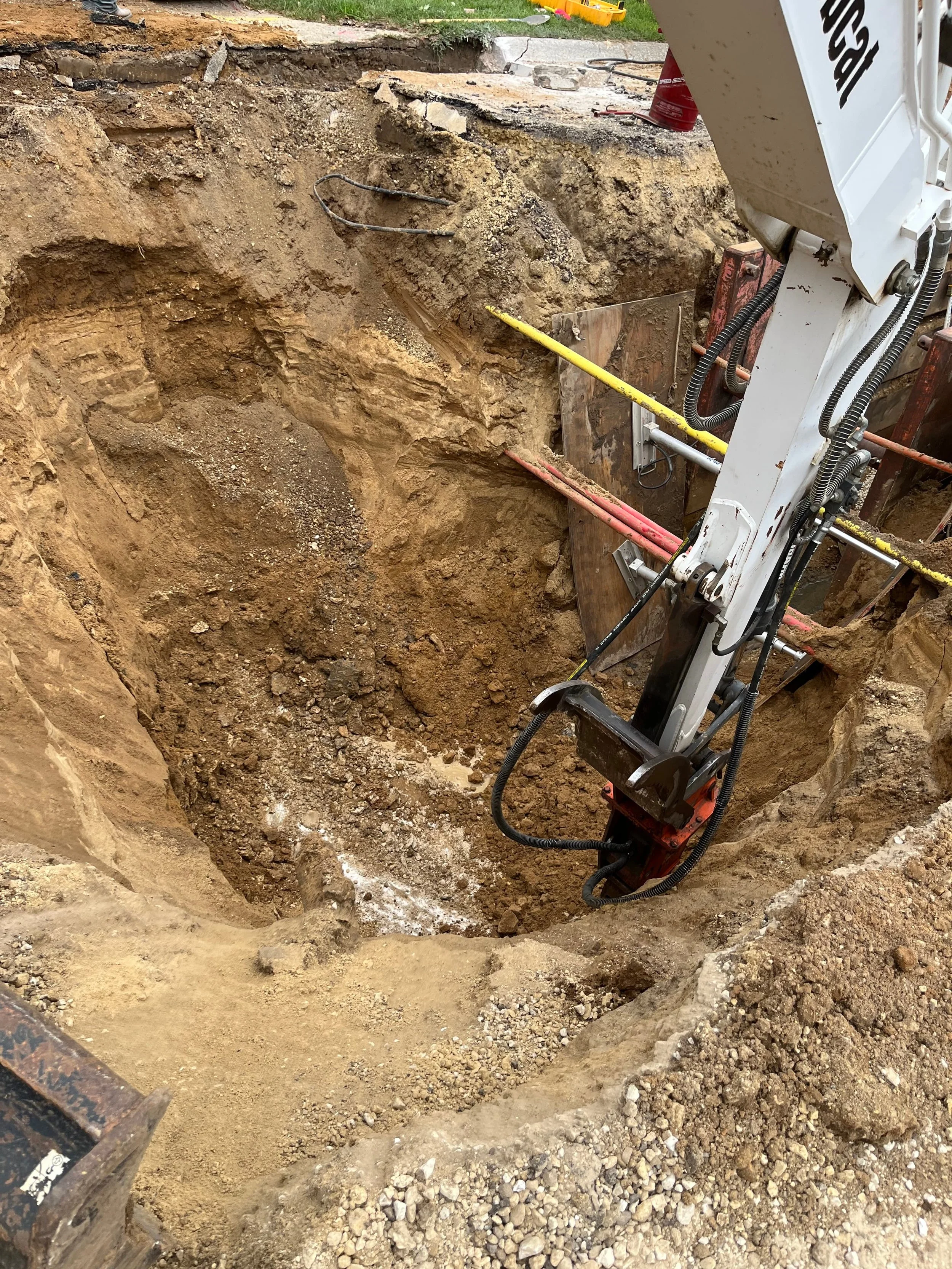
Clearing the work area means opening up the surface above the existing main — carefully, because there's more than one utility line running underground on any given street. Once the old main is exposed, it gets shut down and temporary water supply solutions go in place so residents aren't left without service during the work.
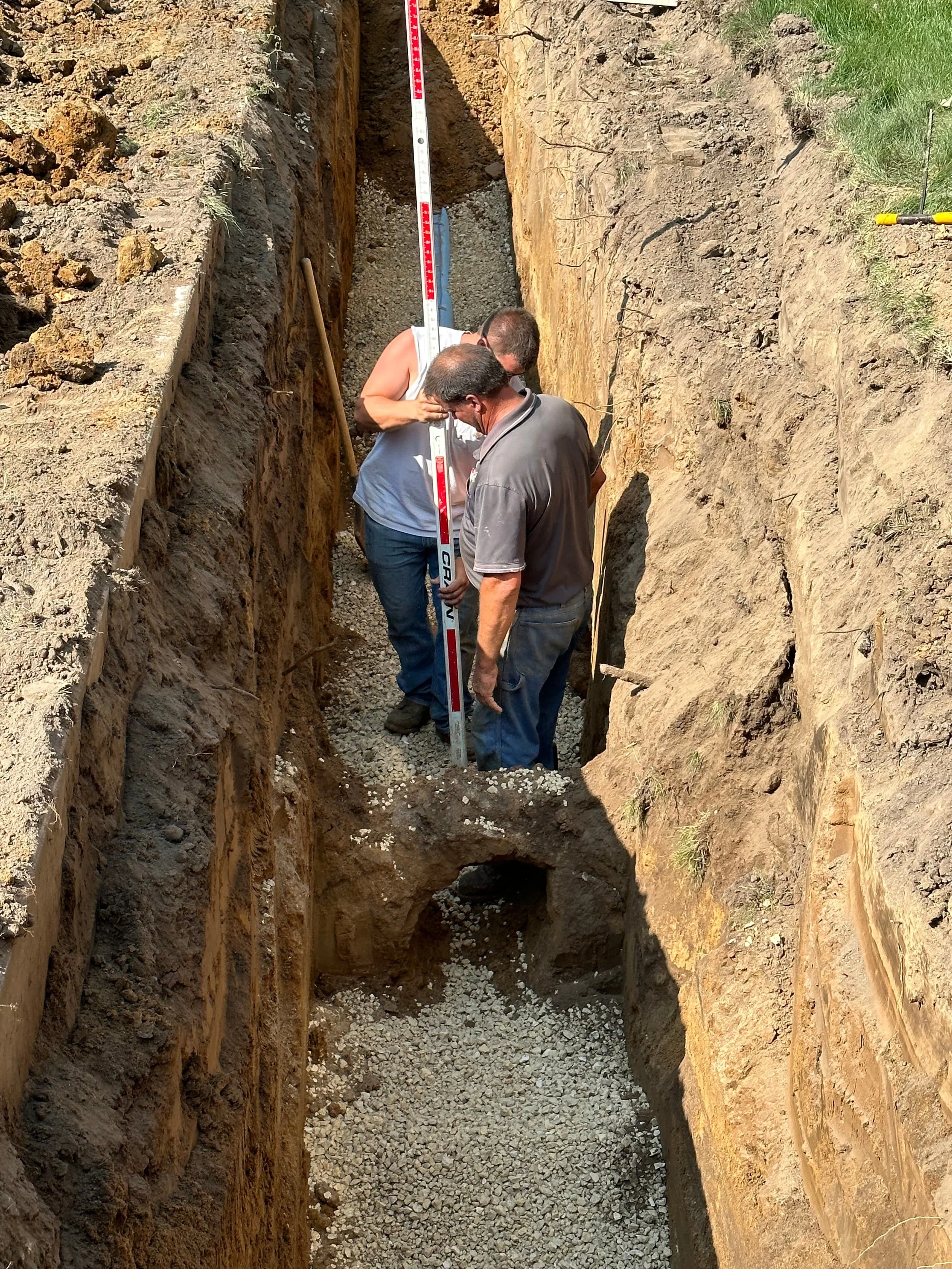
Then the old pipe comes out. It sounds straightforward. It rarely is. Decades-old infrastructure has a way of being exactly where other things are, and removing it without disrupting neighboring lines requires patience and experience.
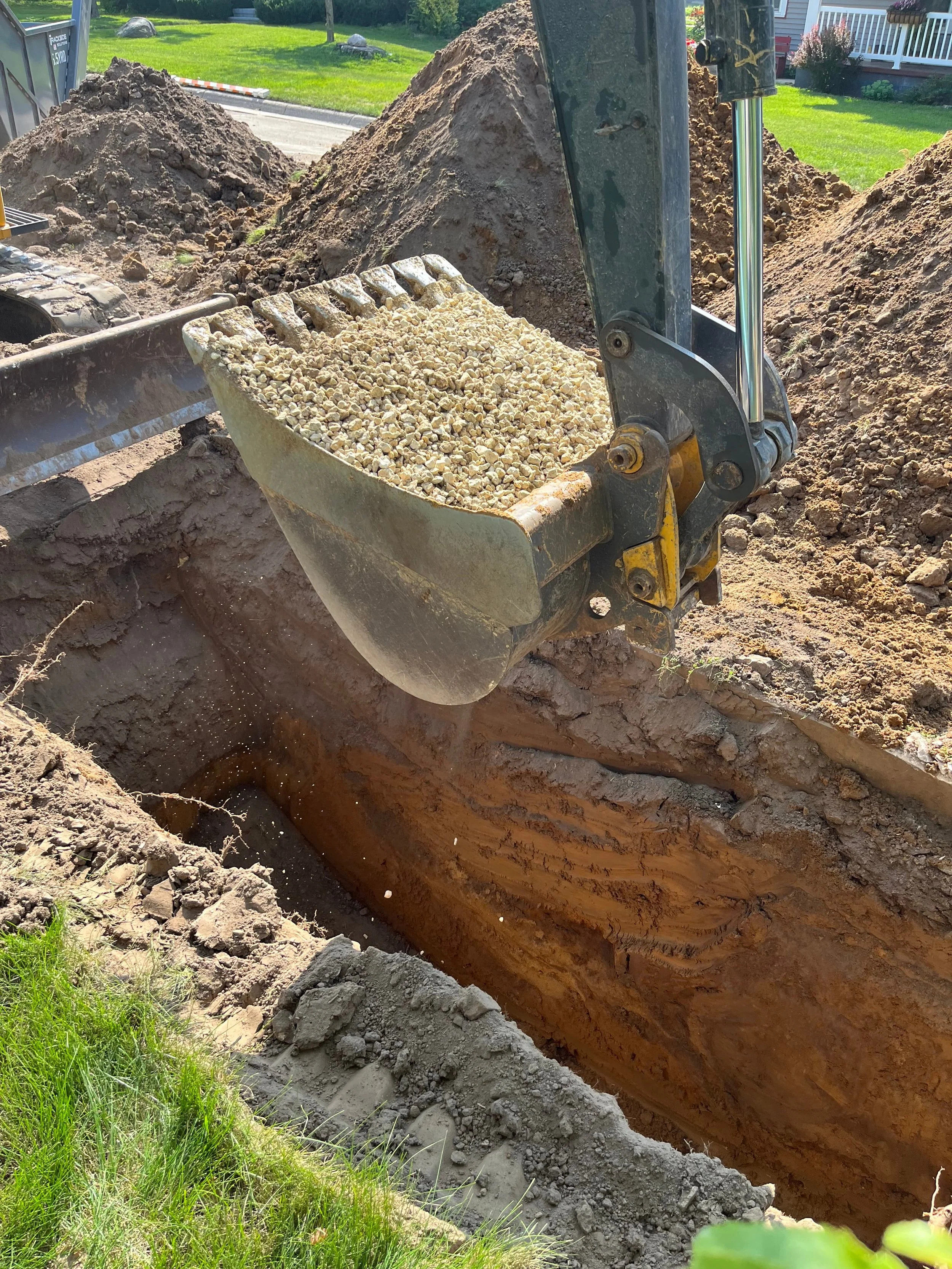
Excavator backfills trench on a municipal water main replacement job.
Step 4 — New Main Installation
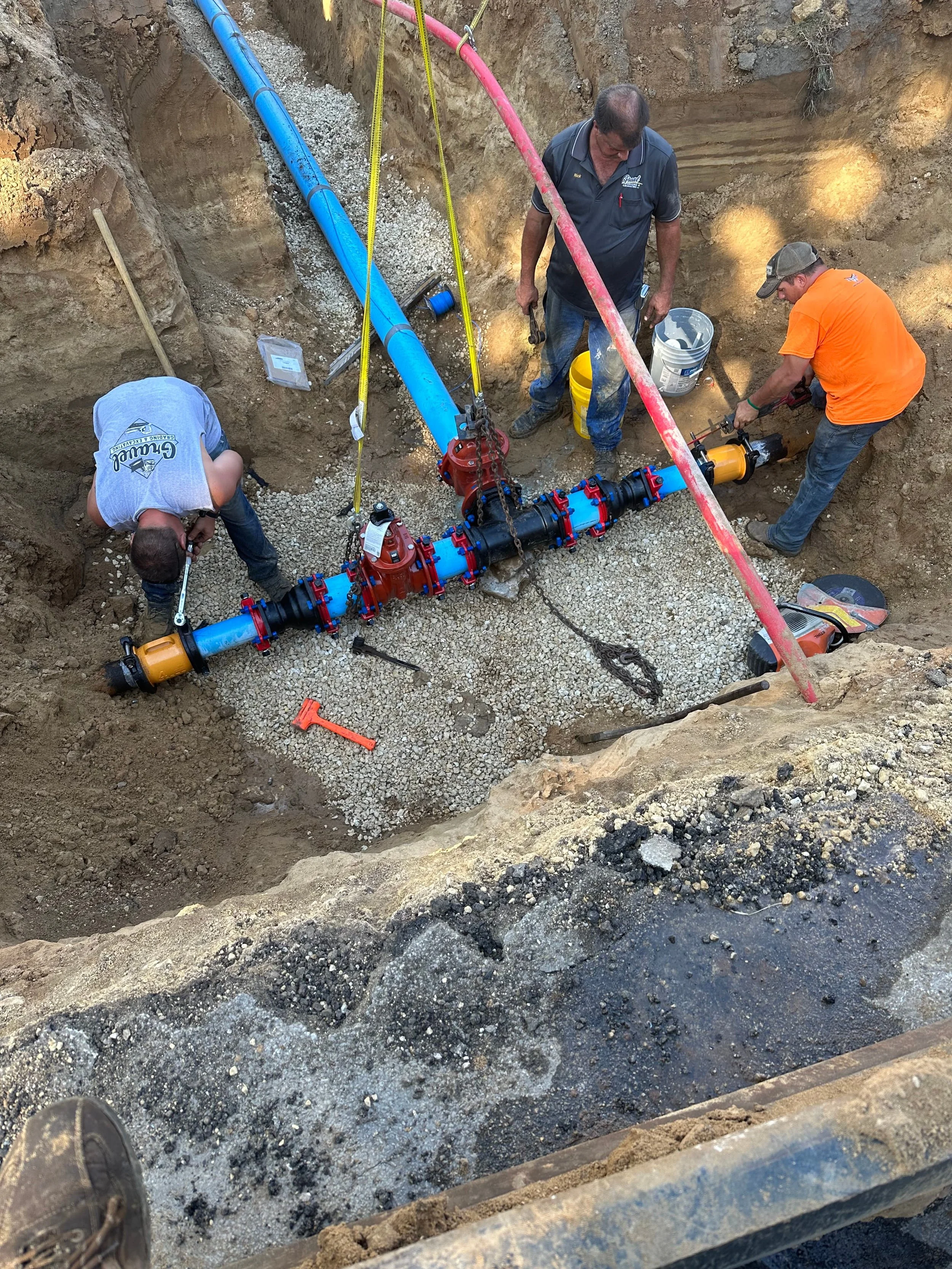
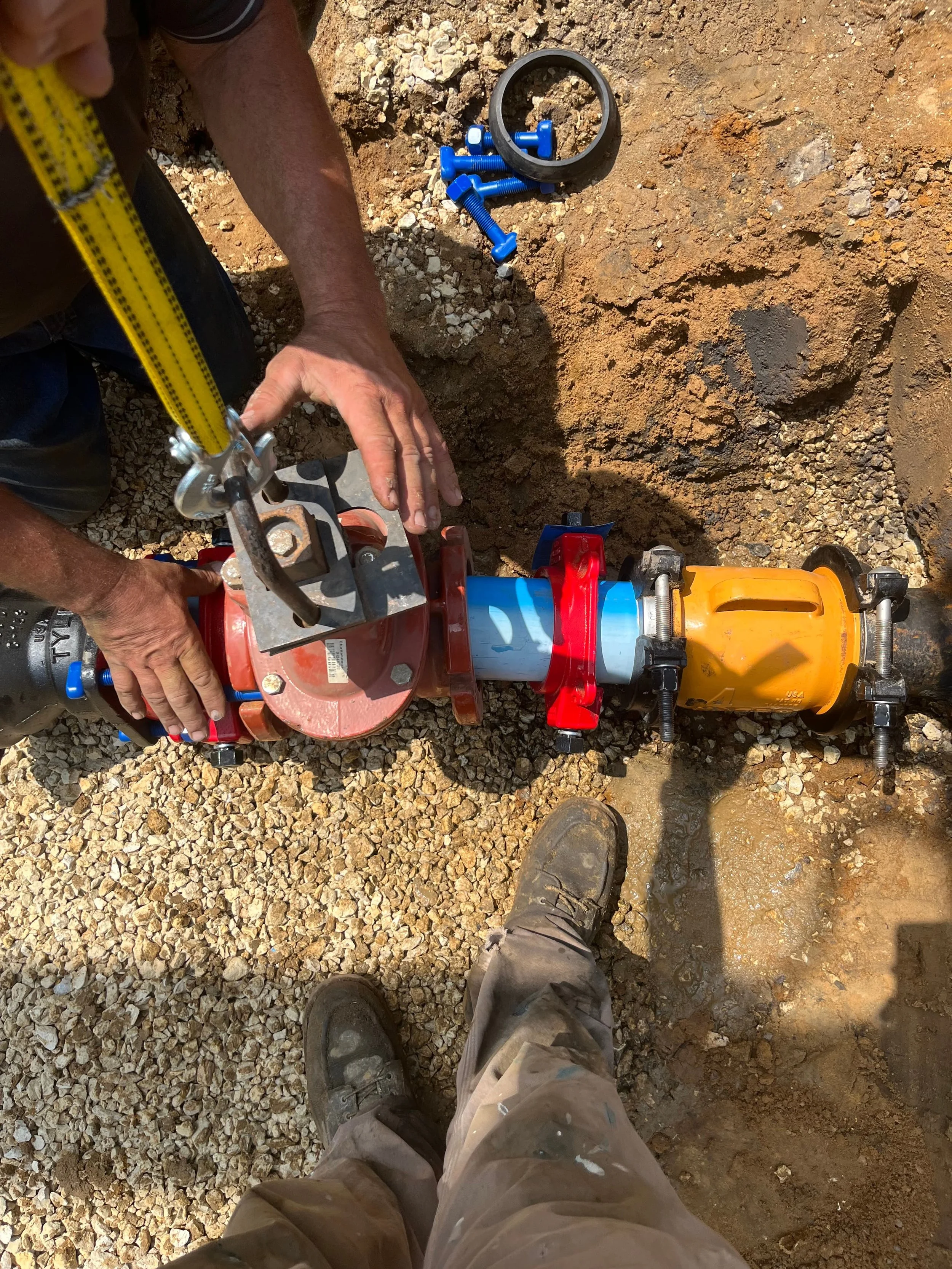
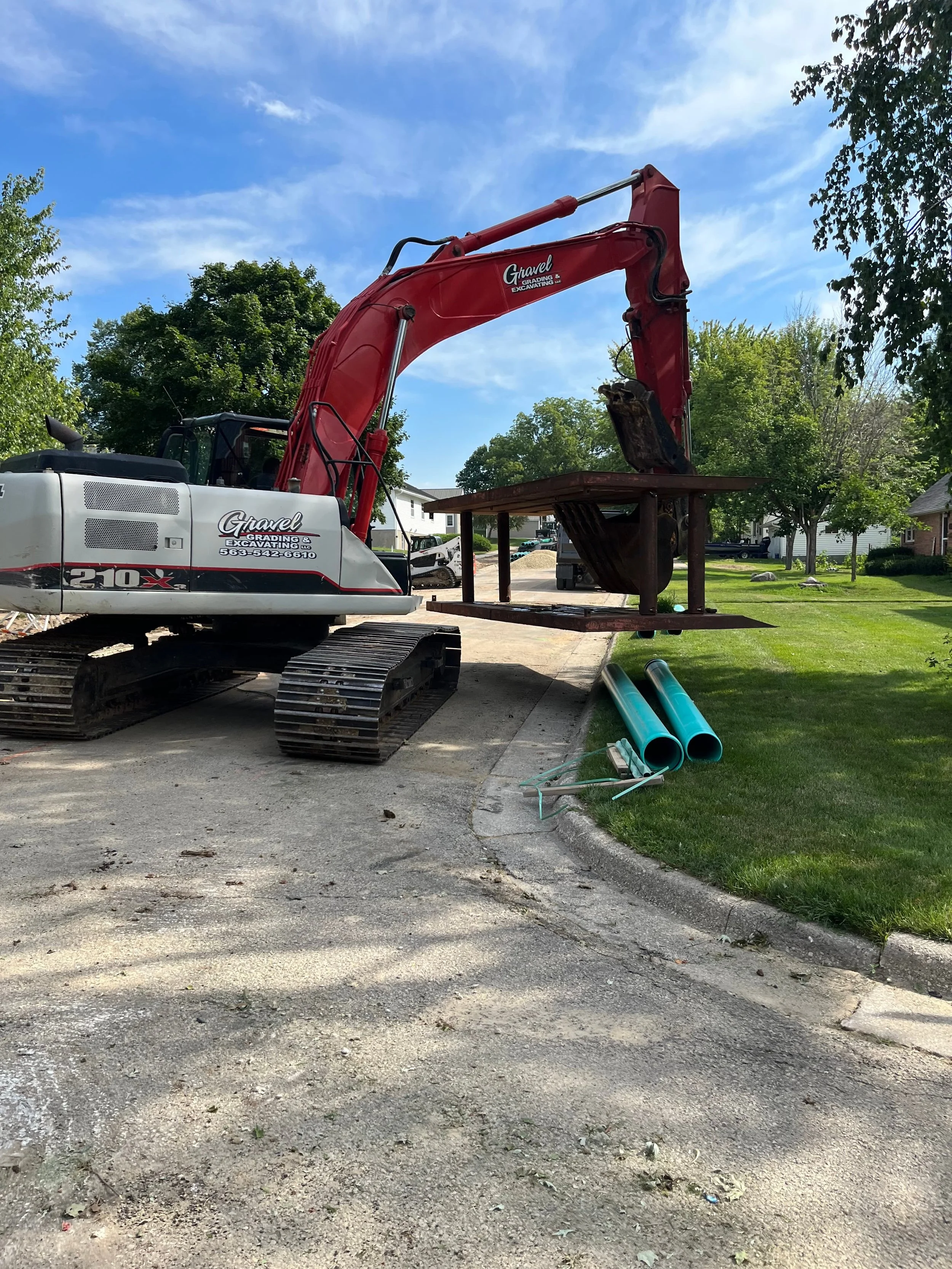
The new water main goes in according to the project blueprints — modern materials, properly aligned, with watertight connections at every joint. No shortcuts on the seals. No guessing on alignment.
Modern pipe materials have come a long way. Durable plastic and corrosion-resistant options installed today are built to last significantly longer than what they're replacing — which means the City of Cascade is getting decades of reliable service out of this project.
Step 5 — Testing Before Anything Gets Buried
Before a single shovelful of dirt goes back in the trench, the new main gets tested. Every joint, every connection, every segment gets inspected. Pressure tests confirm the line can handle full water flow without leaks or failures.
If something doesn't pass, it gets fixed before it's underground. That's the job.
Step 6 — Restoration
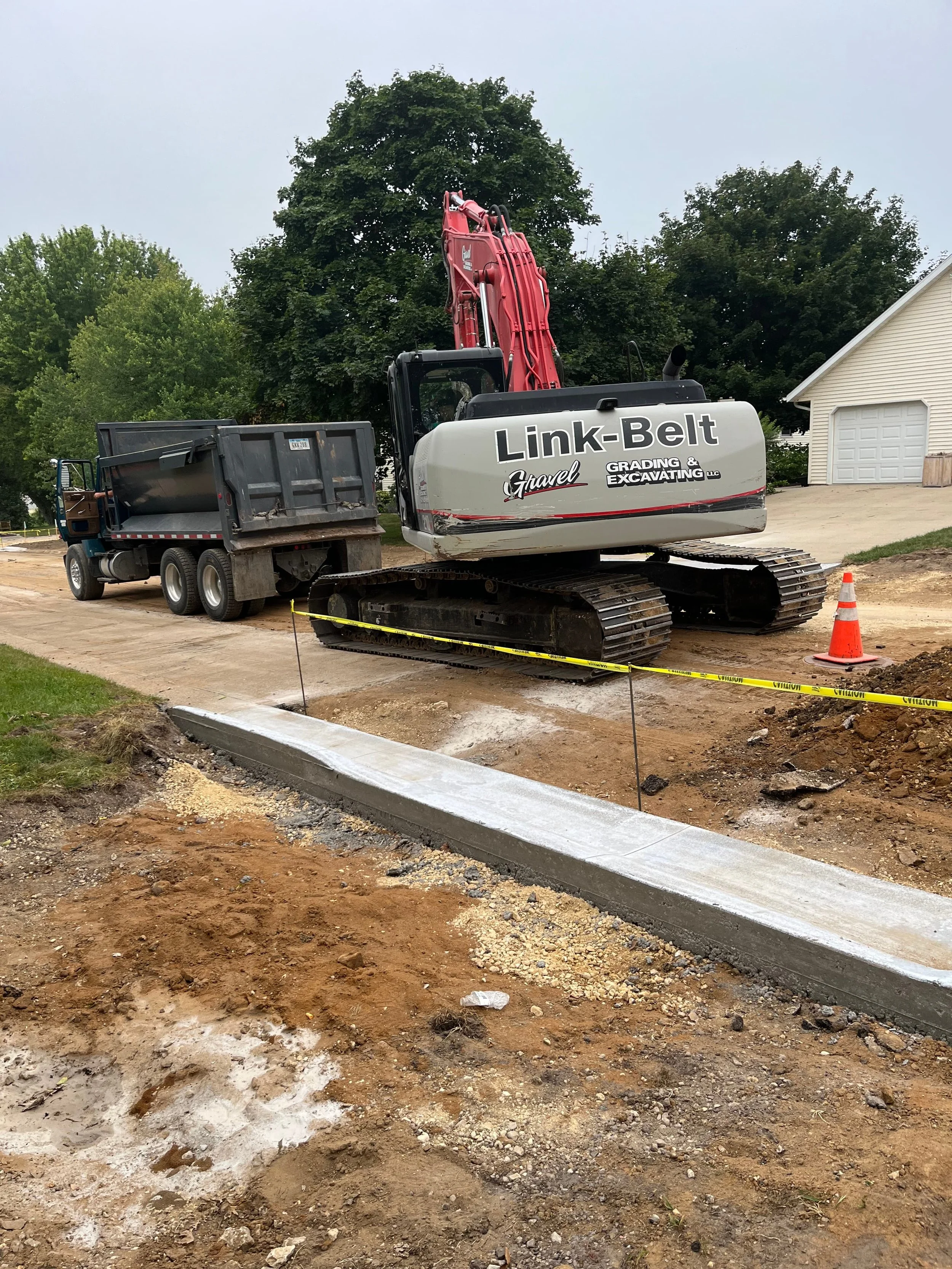
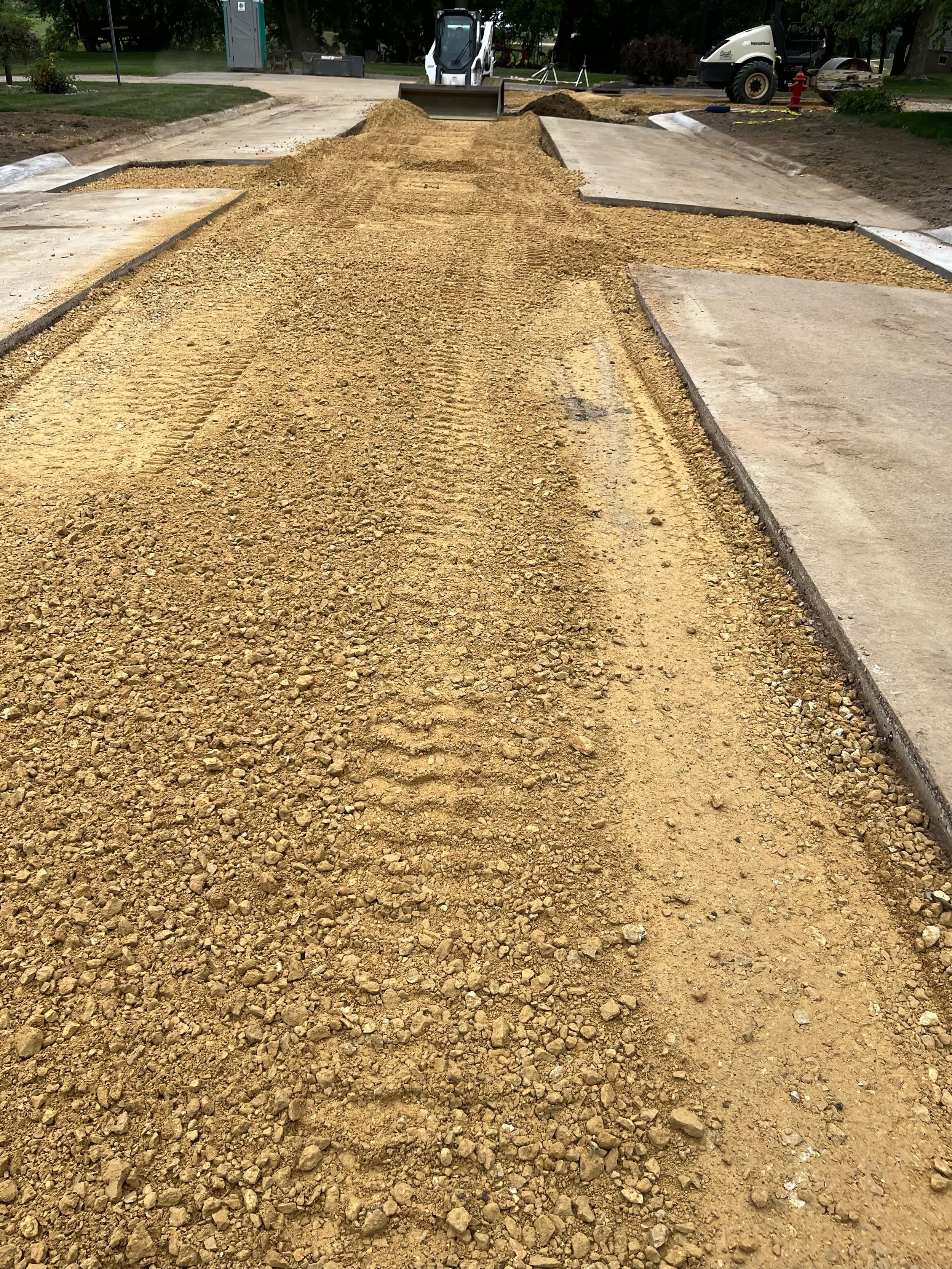
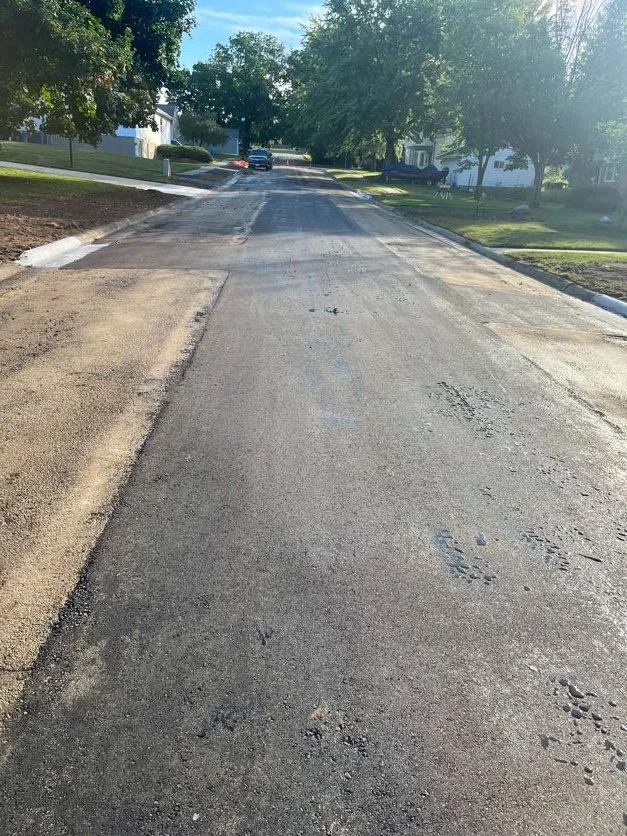
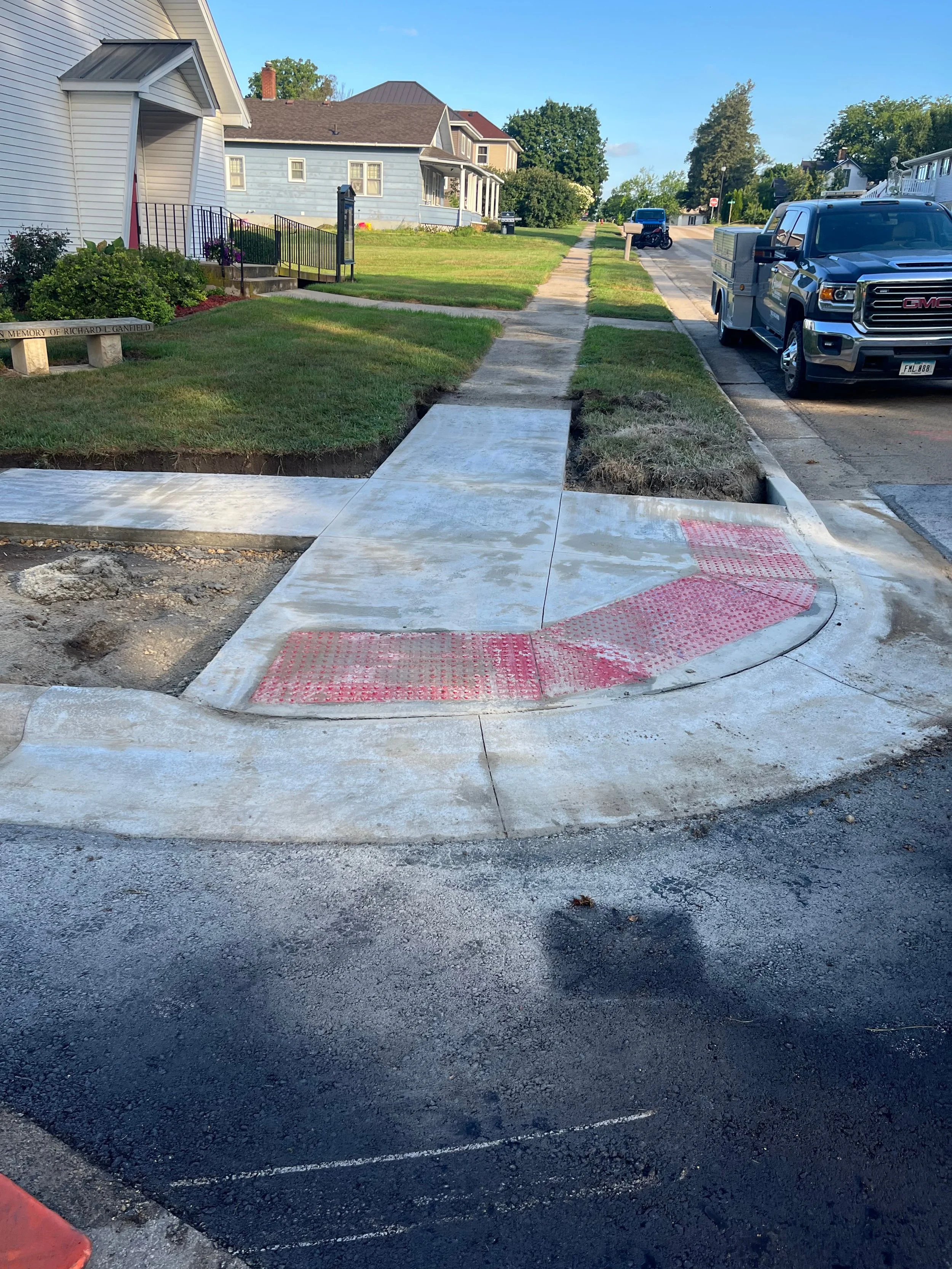
Once the main passes inspection, the trench gets backfilled, the road gets repaved, and the neighborhood goes back to normal — or better than normal, since the infrastructure underneath it is now in significantly better shape than it was before.
A project like this is only as good as the restoration that follows it. Nobody wants a repaved street that settles unevenly six months later.
A Local Job, Done Right
Water main work is exactly the kind of project that doesn't get much attention when it goes well. The water comes on, the road looks like a road again, and life continues.
That's the goal. That's what the City of Cascade needed, and that's what we delivered.
Thank you to the City of Cascade for bringing us in on this project, and to the residents of 3rd Ave SE for their patience while we worked. It's always good to do work that directly benefits the community we've been part of since 2004.
If your municipality or commercial property has aging water, sewer, or utility lines that need attention, give us a call. We know how to get in, get it done, and get out of the way.
📞 563-542-6610
Or contact us online to discuss your project.